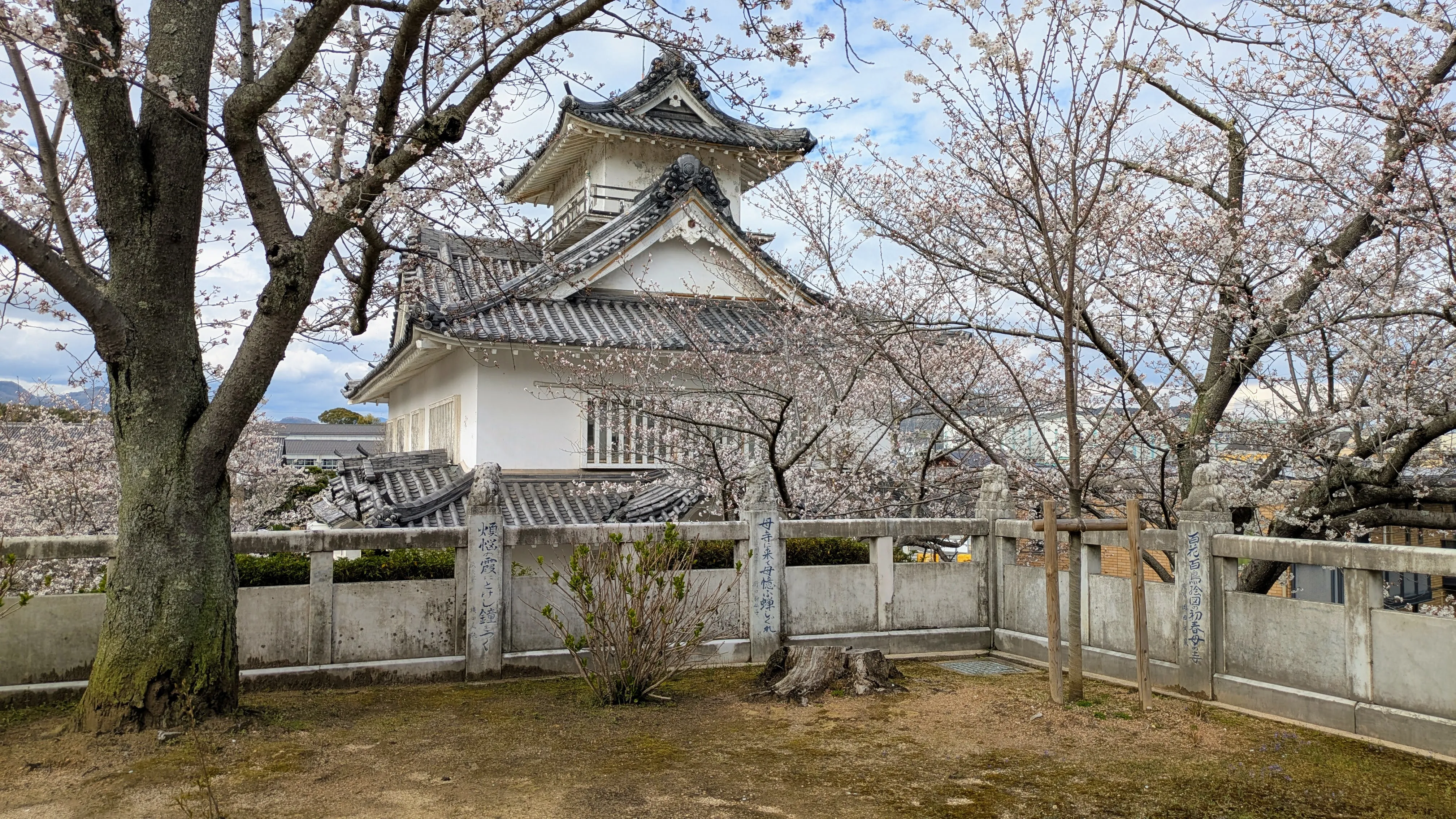
Shikoku
Overview
Highlights
- Delicious food, everywhere!
- Shinto shrines, castles, onsens, and cherry blossoms abound
- Good bike infrastructure and safe riding
Challenges
- ???
Trip Story
Day 0
I'm packing at the last minute, stressing about the bike box and haunted by vague memories of ruthless airline agents, stiff baggage fees and weight restrictions. Eventually everything is done, and we're driving down I-25 to Albuquerque in the early morning.
At the airport parking lot shuttle, we realize the older man driving the shuttle needs help loading the bikes into the van, so we cheerfully join in with the loading and unloading. Check-in is easy, no issues. Phew.
Layover in Denver, then a 12-hour flight to Tokyo. We arrive late at Narita and still need to transfer to Haneda. Yes, that's right - we need transfer to an entirely different airport, and only have a couple of hours. Through some helpful bus operators, we catch the shuttle bus and make it to Haneda with about 30 minutes before departure. We sprint through the terminal, only to get chased down by an ANN airline agent (wearing heels!) who politely asks if we can go back and open the bike boxes for inspection. We repeat the whole process and still make the flight, this time with only two minutes to spare. Sweaty but successful.
We land in Hiroshima, meet Leisha, and drag the boxes across a parking lot to the airport hotel next door. The staff suggests we just leave the bike boxes in the lobby until we need them. No concern. It feels like a good sign for the trip.
Day 1
We awake and go straight to the hotel breakfast, our first Japanese food of the trip. A hotel breakfast buffet might not sound like a true "meal", but this one is wonderful. A mix of everything: sushi and sashimi, miso, pickled plum, radish, daikon salad, fried fish cakes. Nearly everything is delicious, and the novelty of it all makes me overlook the few items that I don't find particularly appetizing. Even the relatively tasteless rice pudding grows on me.
We assemble the bikes in the hotel lobby without much fuss. The staff is very accommodating and insists we take as much space as we need. They are concerned that it's too cold outside for us to be biking (50 degrees F). We find our way out of the maze of roads around the airport and hotel, and ride east toward Onomichi. It's mostly downhill. Everything is green. Trees, grass, and cherry blossoms line the roadways. Drivers go slowly and it feels like they are always watching us. The cars are small and unintimidating. Biking here feels safe.
We stop in a small town called Hongo and, using Google Translate, ask if we can mail our giant duffel bag-of-bags ahead to Takamatsu. We can't easily carry it for the trip, but will need it to pack up for the return flight. The woman tells us it's too big and heavy, and suggests we try Japan Post in Mihara. We ride along river levees on a road that seems too small to be a road. Every so often a car squeezes by. We get used to it. It feels safe and normal.
We manage to mail the bag at the Mihara post office. It takes a long time to navigate the process in a foreign language. There's a lot of back and forth through translation about the details. It's amazing how many routine questions we answer on a daily basis, without thinking about them, I realize. The entire post office staff — all women in uniform — are enthusiastic about helping us. An international traveler with no return address sending a large bag to a city with no specific destination and an undefined timeline is an odd request. At one point they're on the phone, possibly calling another office to confirm details. Eventually they have miraculously sorted it out. We all celebrate a bit, smiling at each another and clapping. It feels like a small victory.
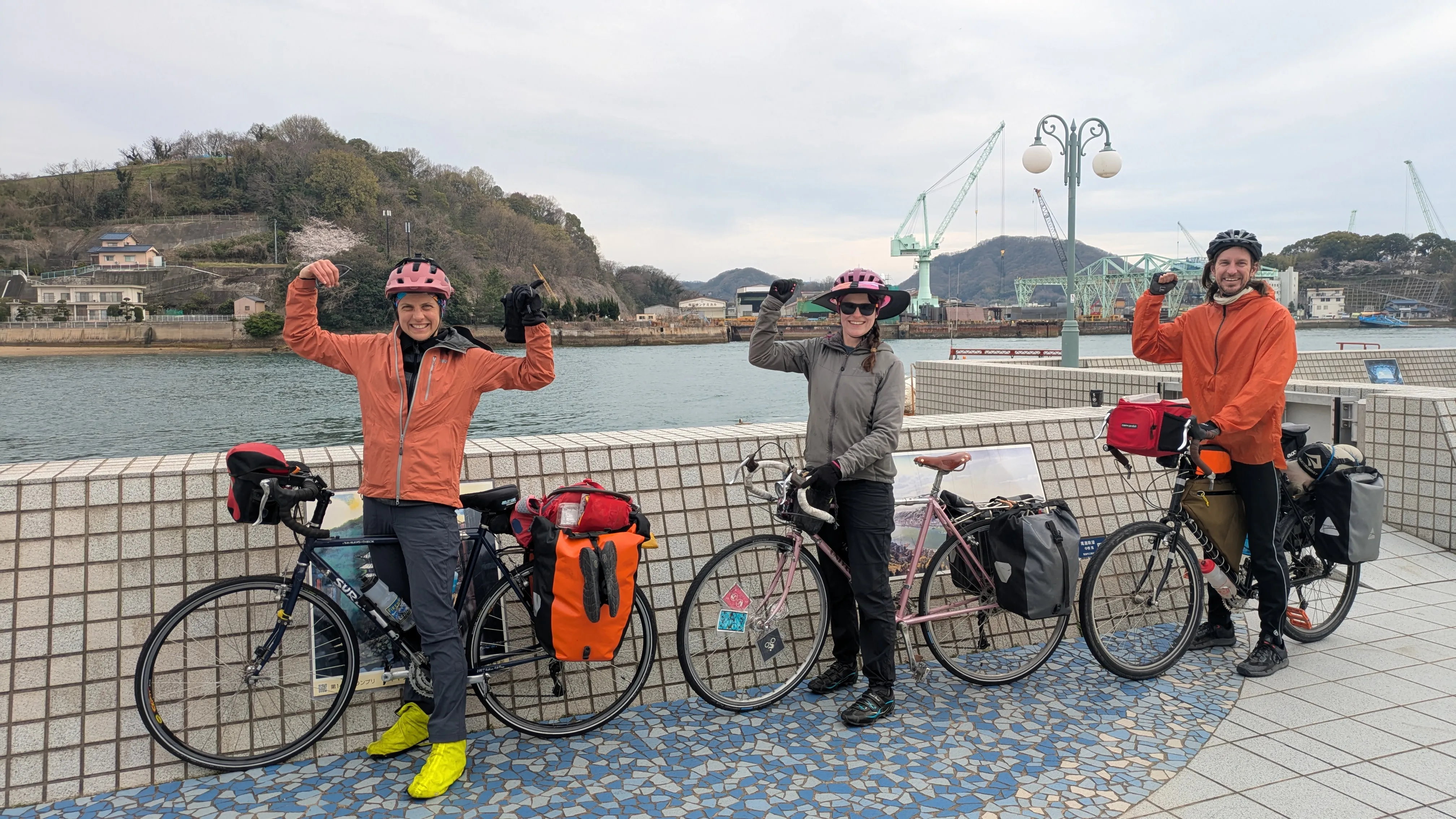
Mihara is a bit industrial and has busy, bumpy roads, but I am distracted from this by the novelty of riding on the left, architecture, trains, and the lack of zoning. We at lunch in the town plaza, before we ride on to Onomichi. We have an Airbnb here, with some quirks. The main door is in a narrow covered hallway off the street, and is four and a half feet tall. The sliding door to the main living area falls and punctures itself on a bookcase. We can't figure out the light switches, what buttons control what, or why there are remote controls and flashlights in every room. We walk around town exploring the Ushitora shrine, an alleyway full of cat-themed figurines, shrines, art, and diversions.
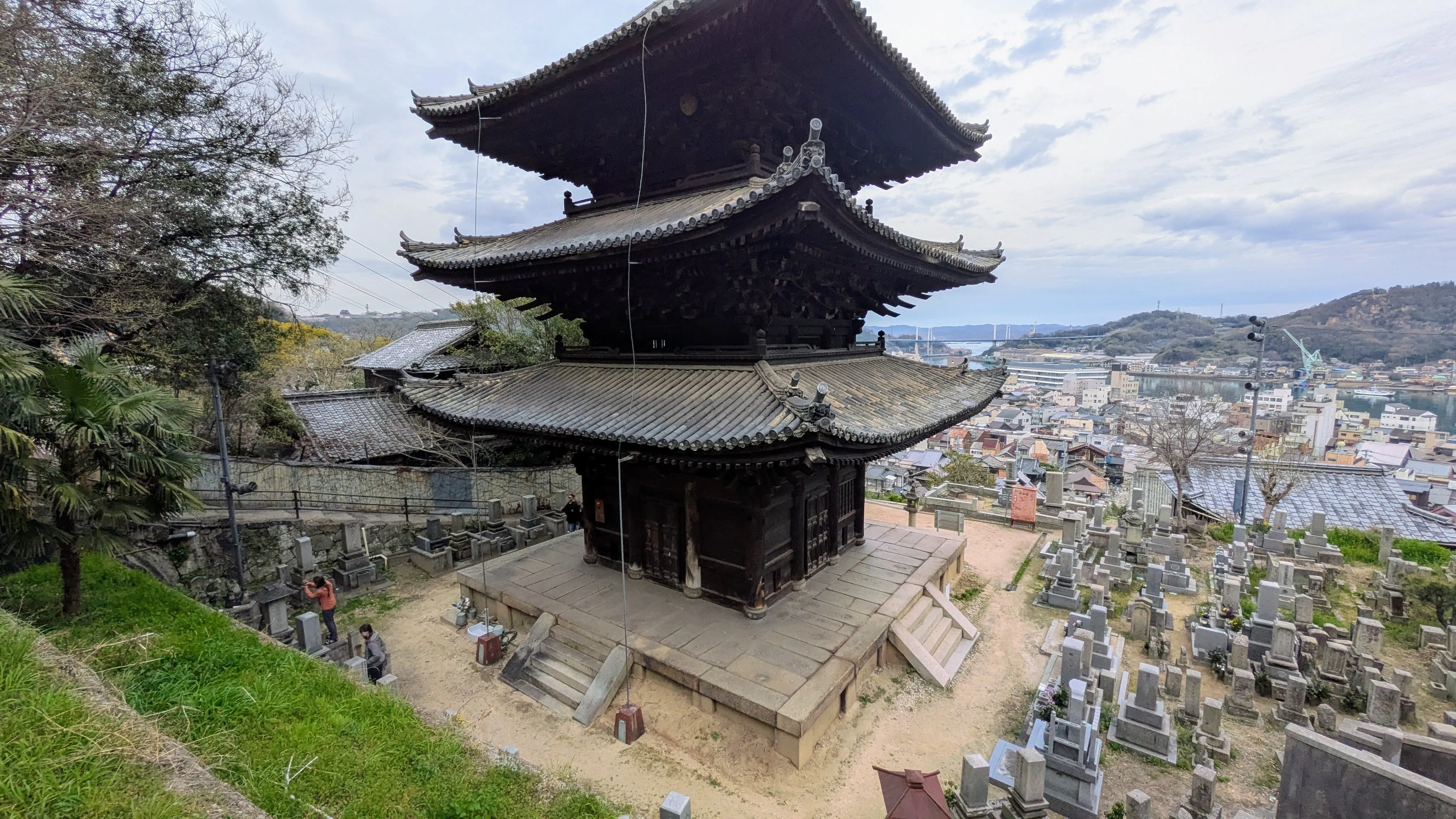
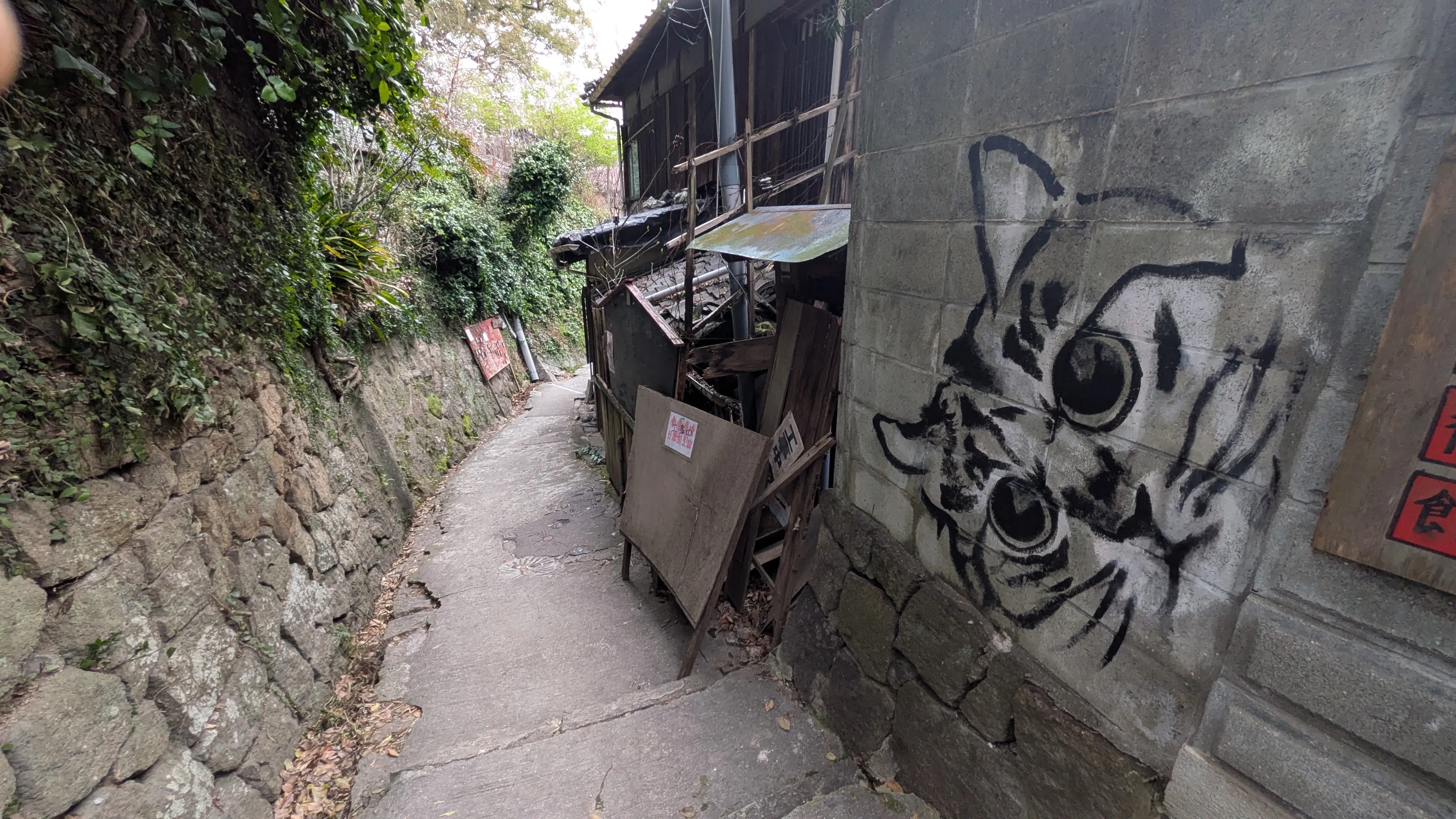
We go eat Ramen at a nearby recommended restaurant - or rather, we try to, and are promptly stymied by the self-serve ordering machine. It looks like an old retro vending machine that dispenses tickets, but we have no clue how to operate it. The owners mercifully demonstrate it to us. Sorting out a new meal in a new place feels better than it tastes though. The noodle texture seems a bit weird. We lock the bikes up on the street at night. It rains heavily overnight and the bikes were wet, but only our seats and my frame bag - which contains mostly bike tools.
Day 2
We have breakfast at Poem, a tiny and unironically retro diner run by an older woman (and maybe a friend). We have no idea what the menu says and end up pointing at things in the display. There are some hip Japanese tourists in the booth next to us, with fantastic vintage film cameras. The hosts seem oddly pleased to see us clear our plates to the counter when we're finished.
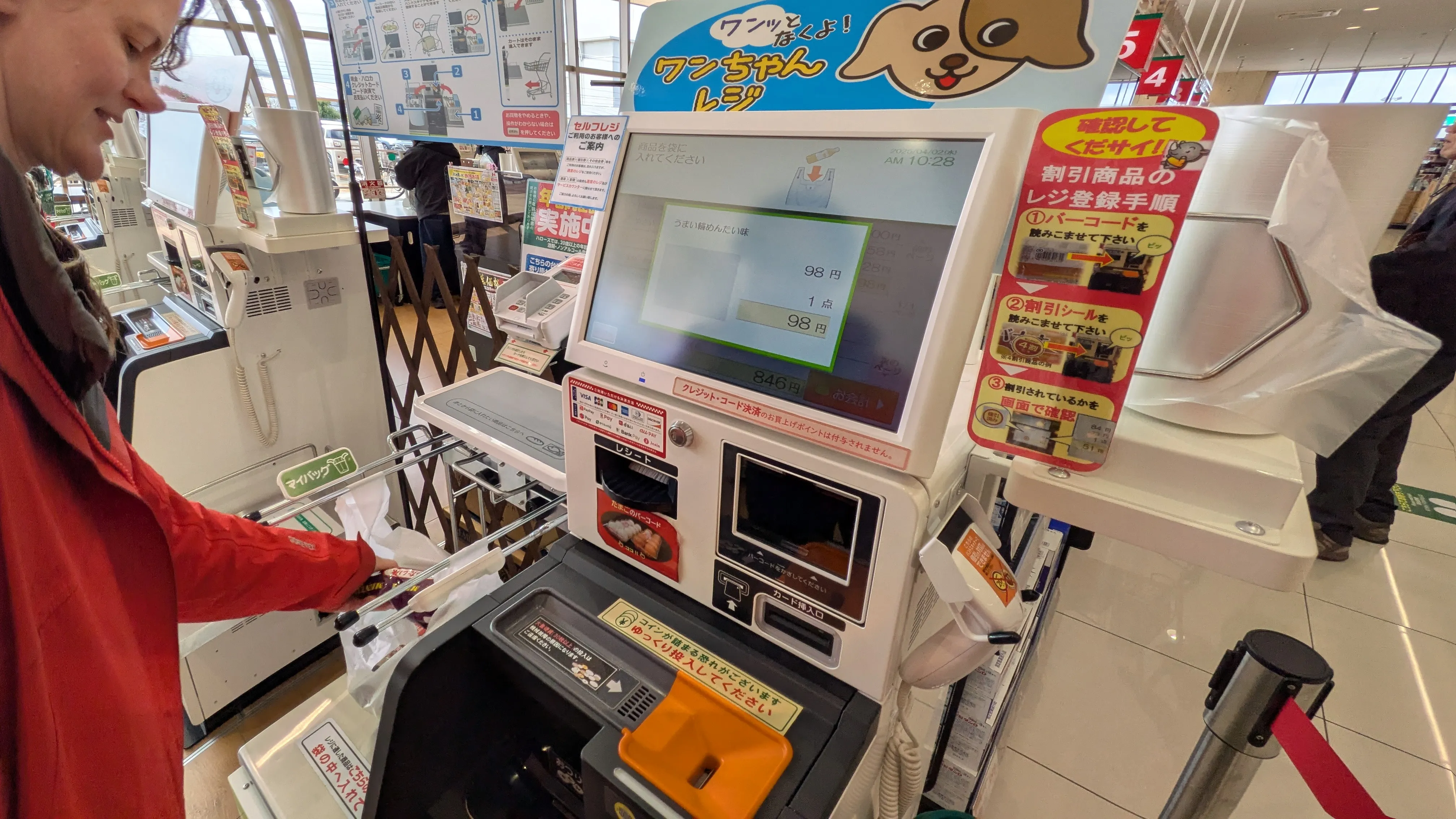
We take the very short ferry from Onomichi across the "ocean" — technically — to the first island and the start the Shimanami Kaido. We stop at a supermarket after a few kilometers. It's fun trying to decode labels and figure out how to operate the self-checkout (to be fair, this is challenging even in one's native language). Outside, the recycling setup is intimidating — no trash, just many spotless, carefully sorted bins - one for each specific type of plastic or paper. I really hope nobody is watching.
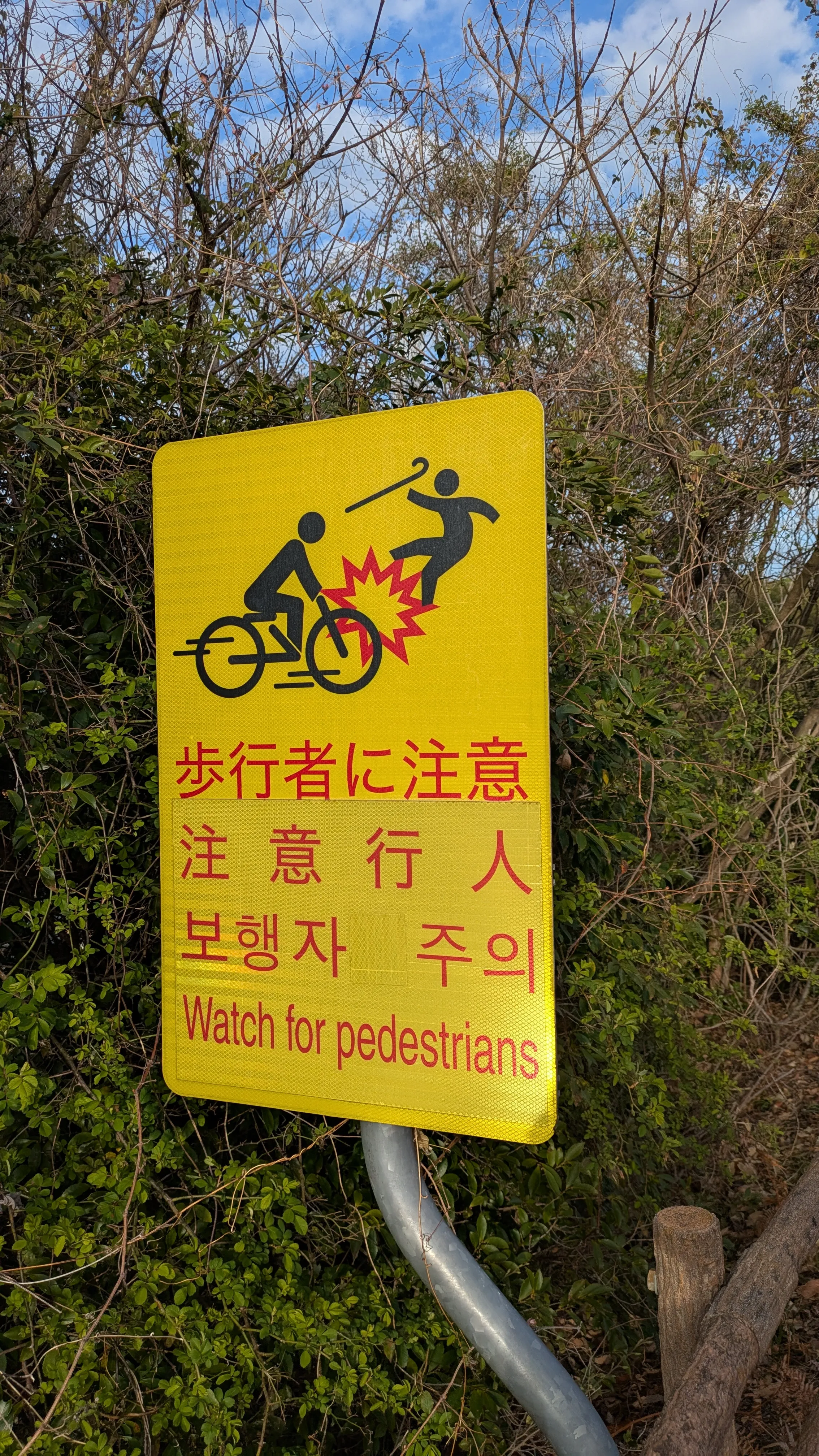
We follow the immaculate pavement marked with blue lines for the bike route. Navigation is effortless. Each bridge has a dedicated "bicycle onramp" with a steady, predictable 3% grade. The first one starts underneath the bridge. The cycling infrastructure is incredible here. Smooth pavement, clear routing.
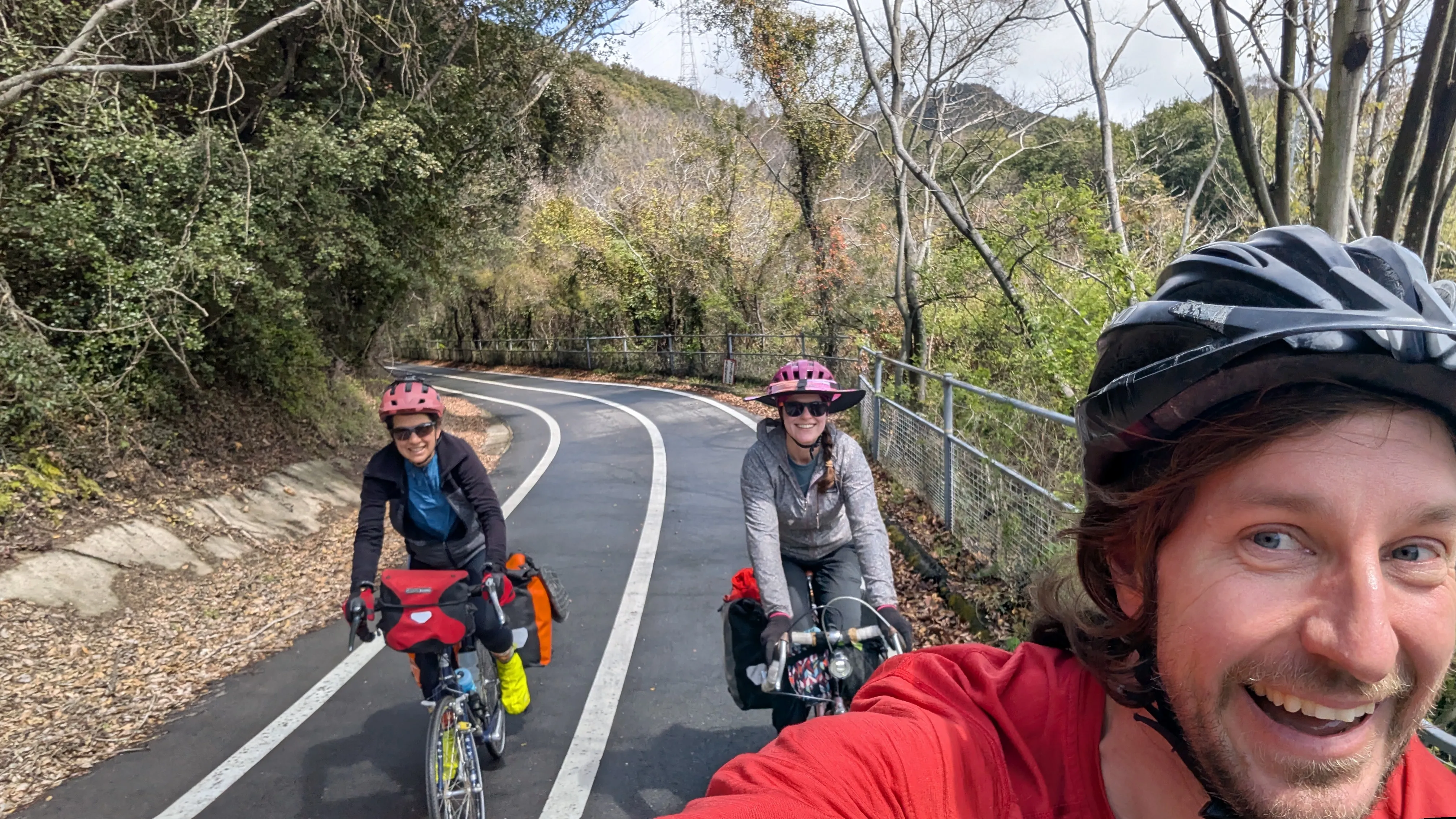
We have constant views of bays, hills, and cherry blossoms in sunny weather. And citrus orchards are everywhere. We finally gather the courage to harvest an orange. It doesn't taste very good.
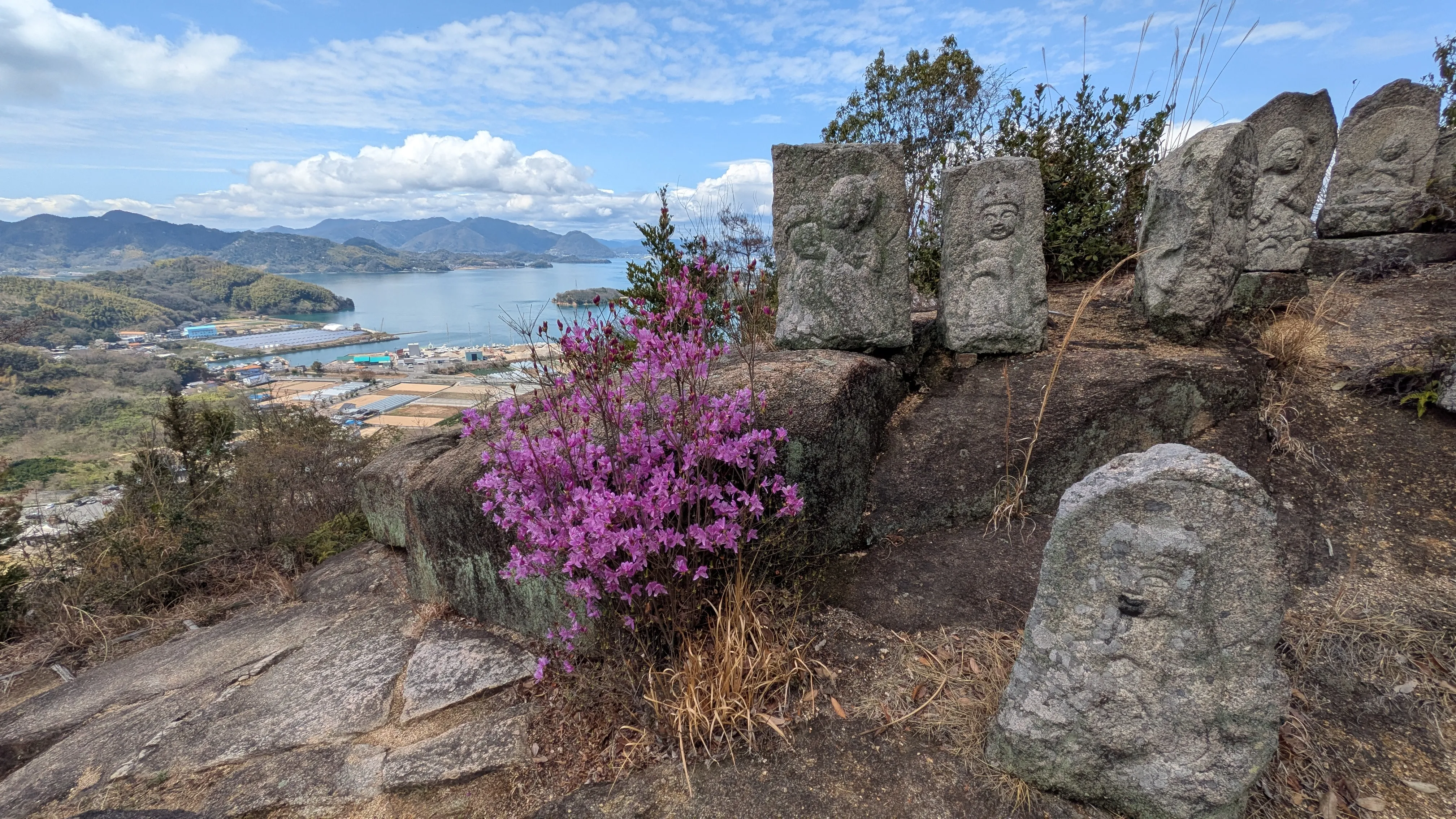
On Innoshima, we take a side trip up a steeeep hill (err, mountain) to a Buddhist shrine at the top of Mount Shirataki. Locals forage for fiddleheads along the hiking trail. The climb is worth it for the 360-degree views and cherry blossoms at the top. At one point, we forget to remove our shoes on a platform and an older man quickly comes out to point at the sign. First reminder. He goes back to smoking a cigarette.
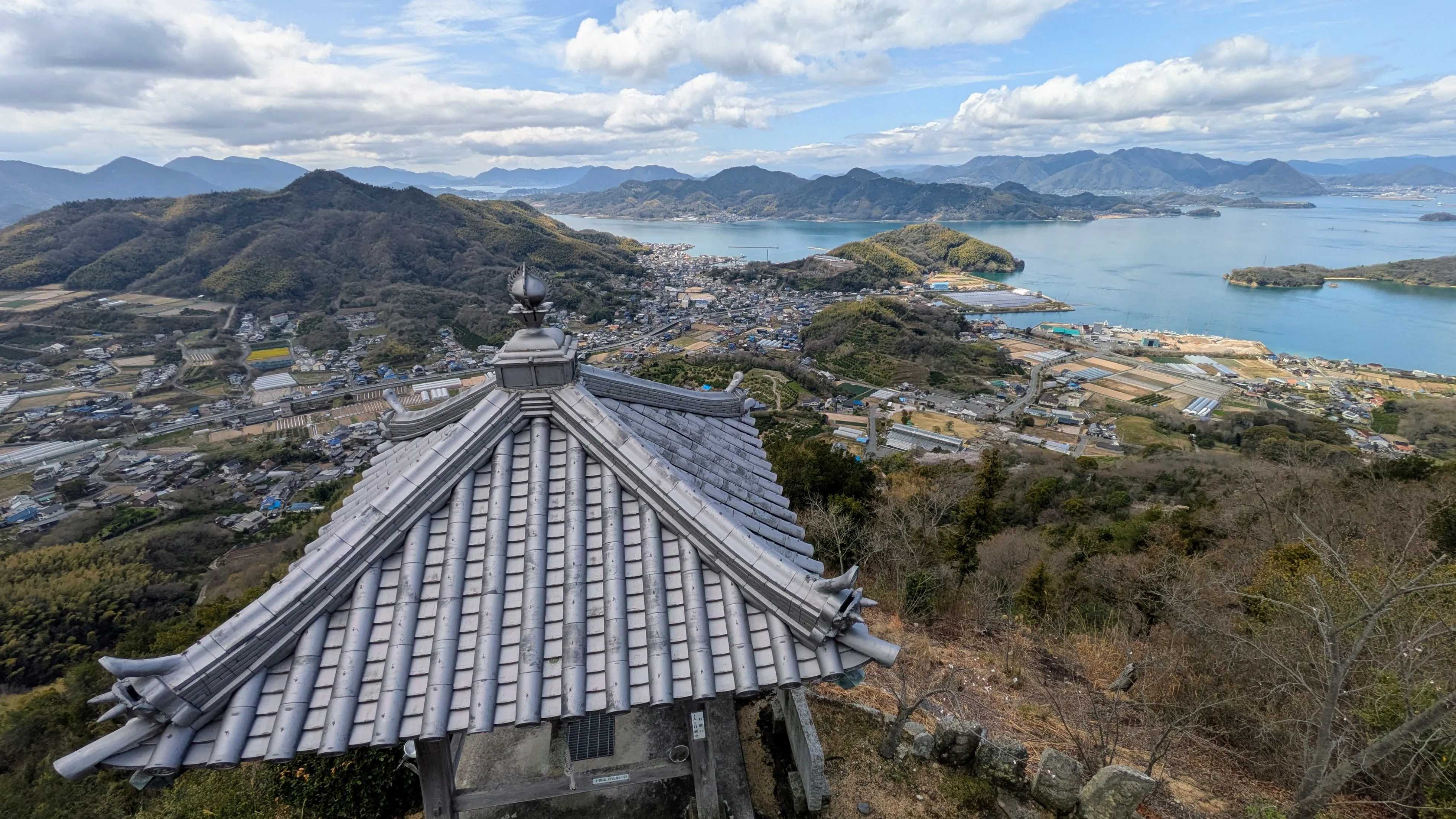
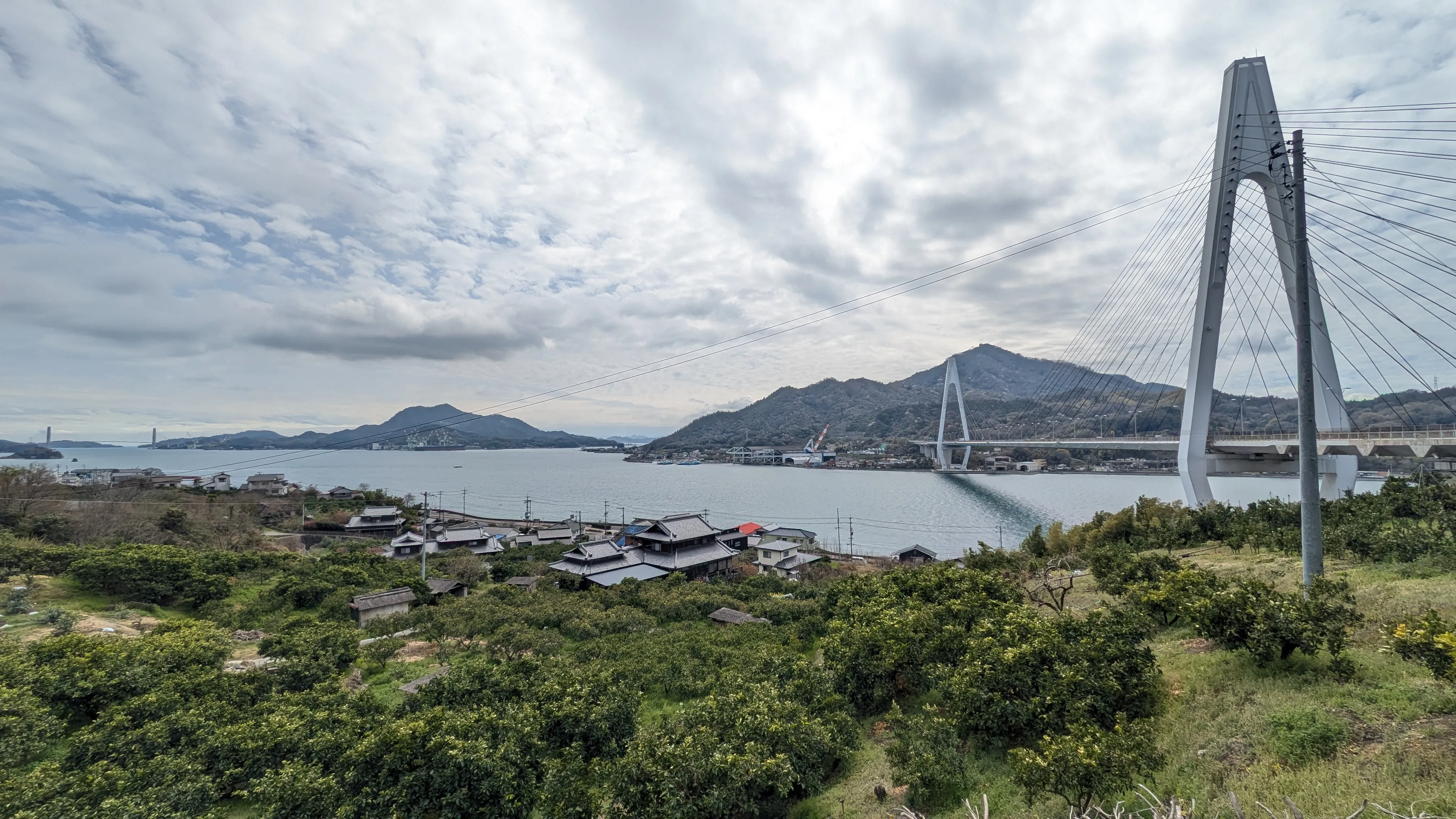
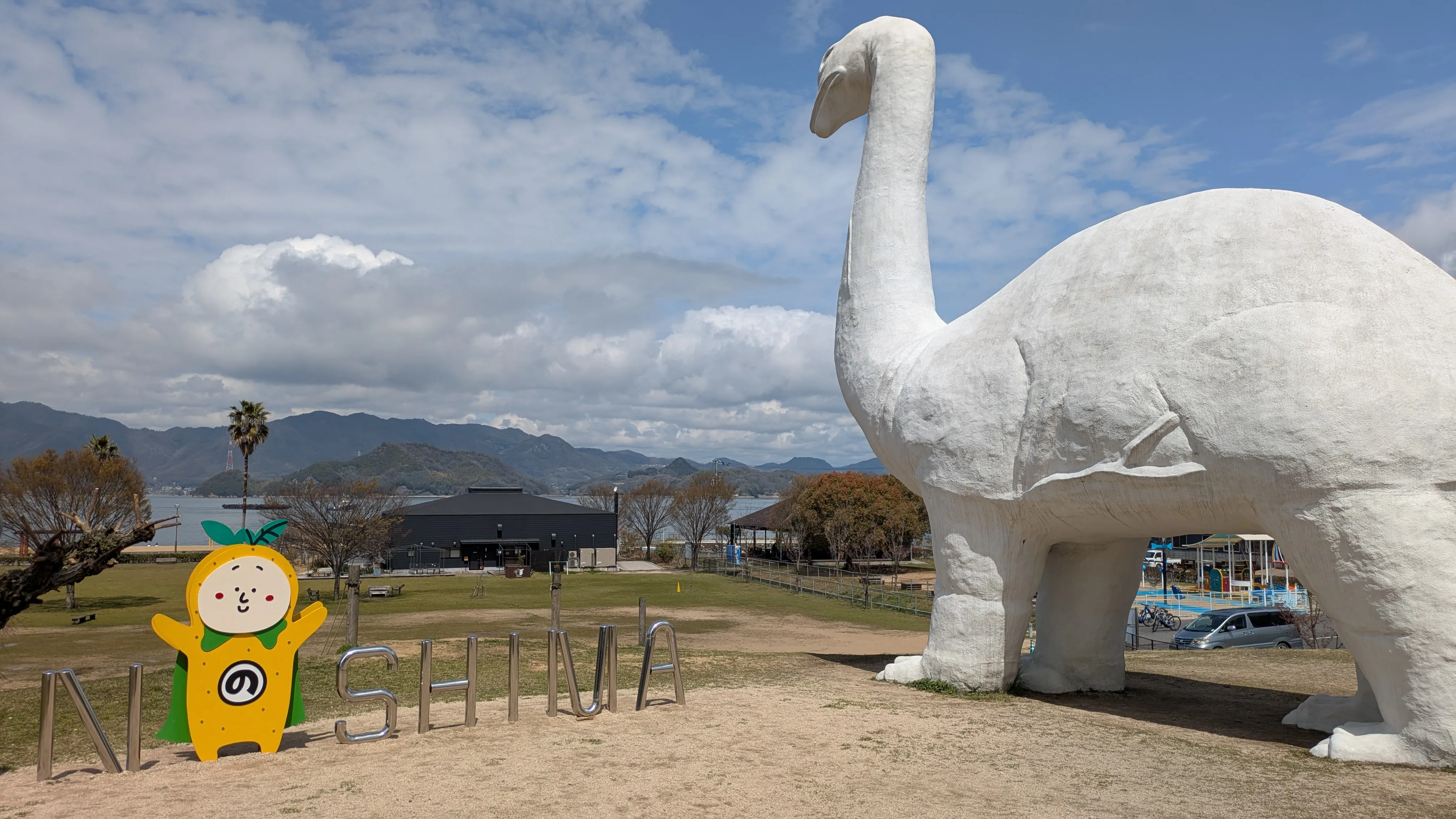
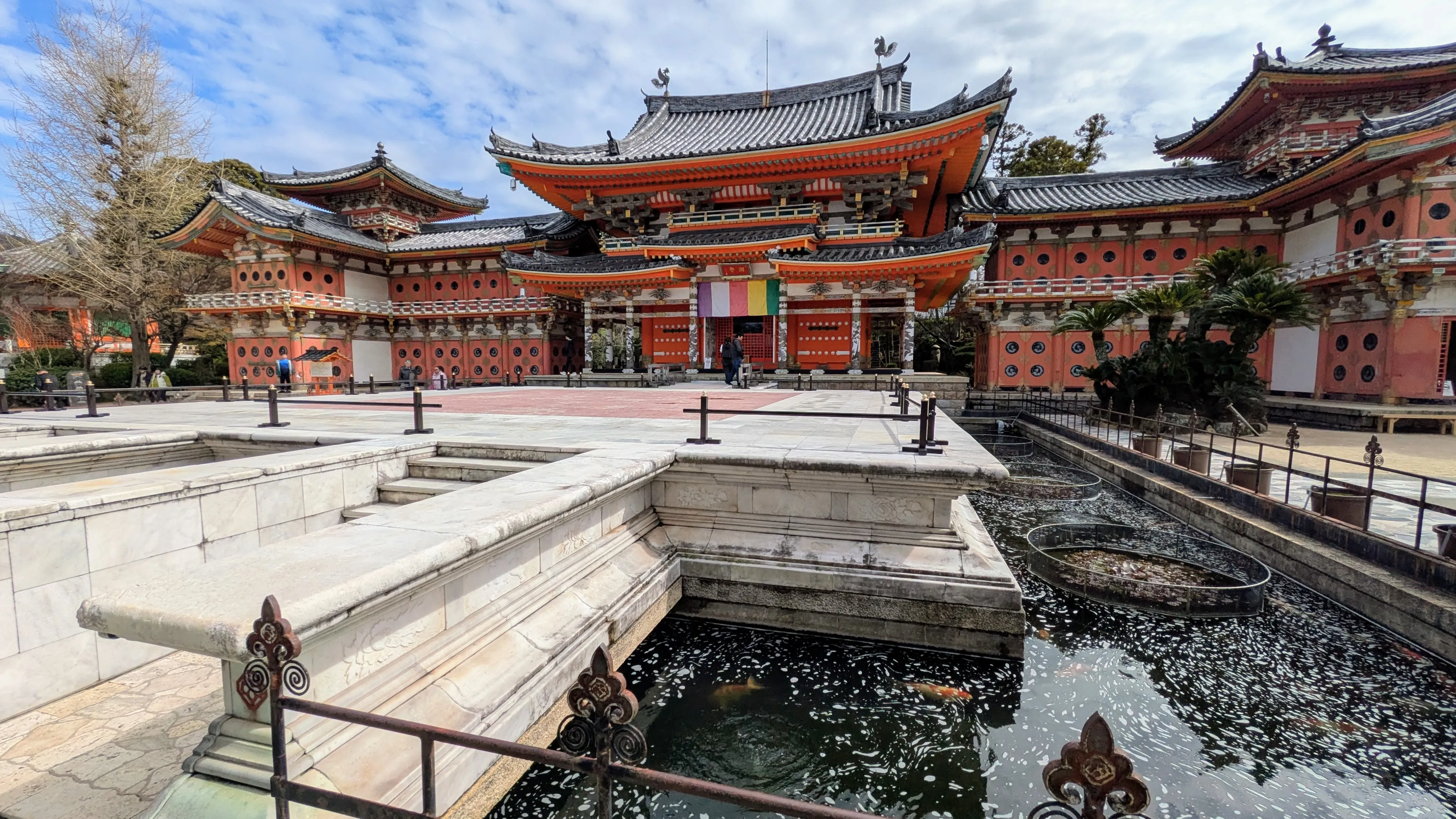
On Ikuchi Island, we visit the Hill of Hope and Kōsan-ji temple. Lunch brings us to a ramen restaurant with another automated ordering machine, but we figure it out without any assistantce this time.
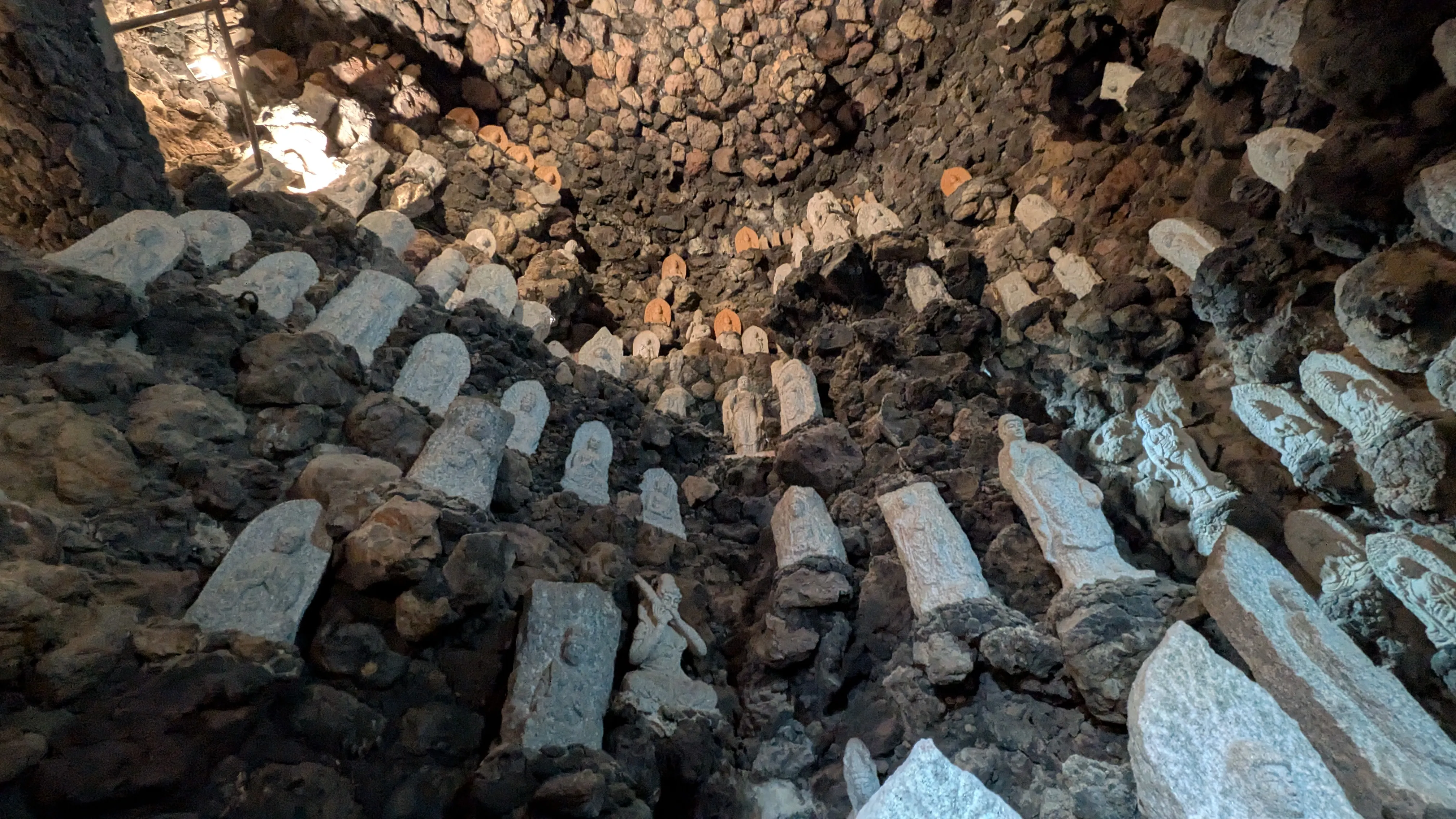
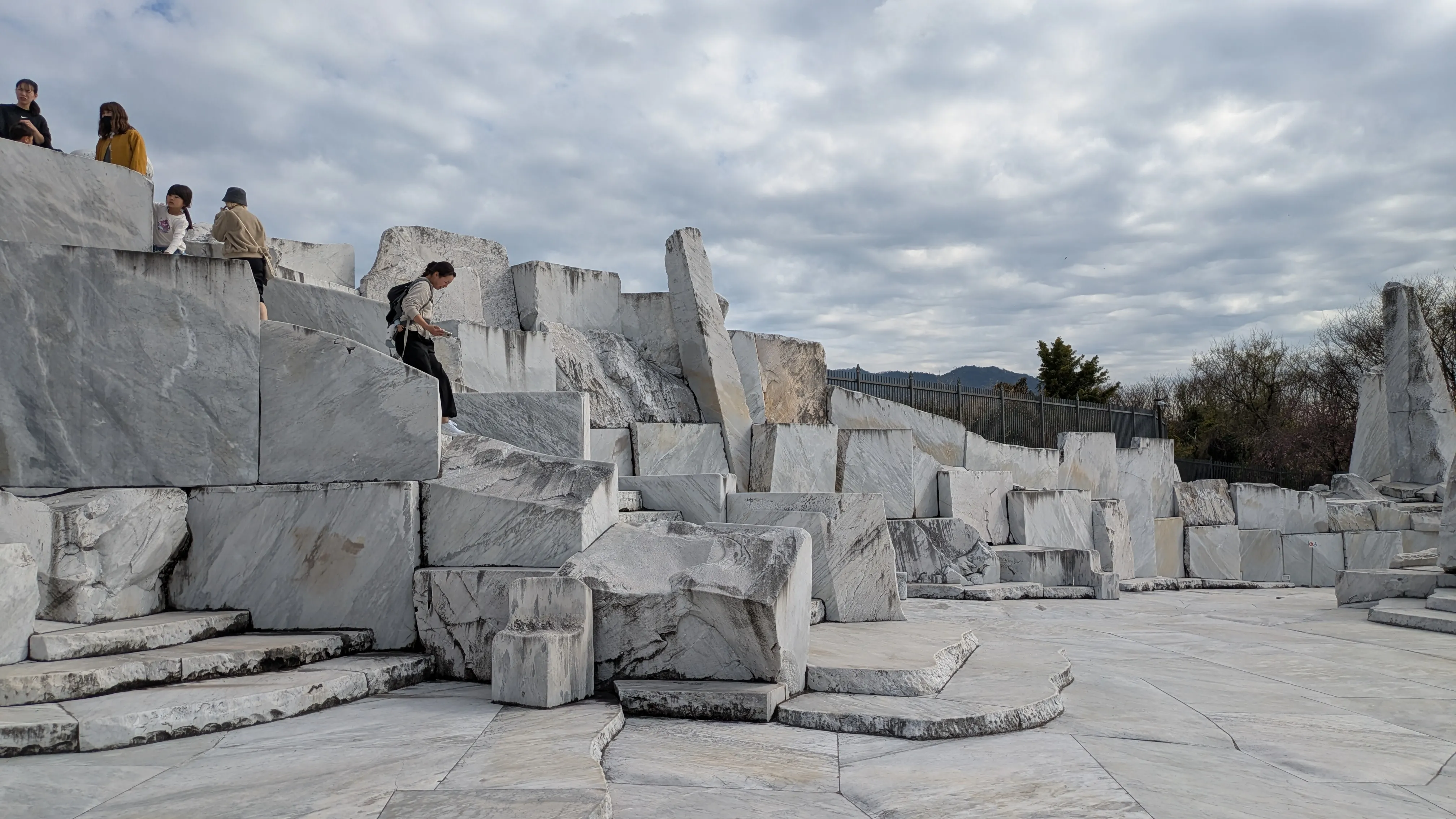
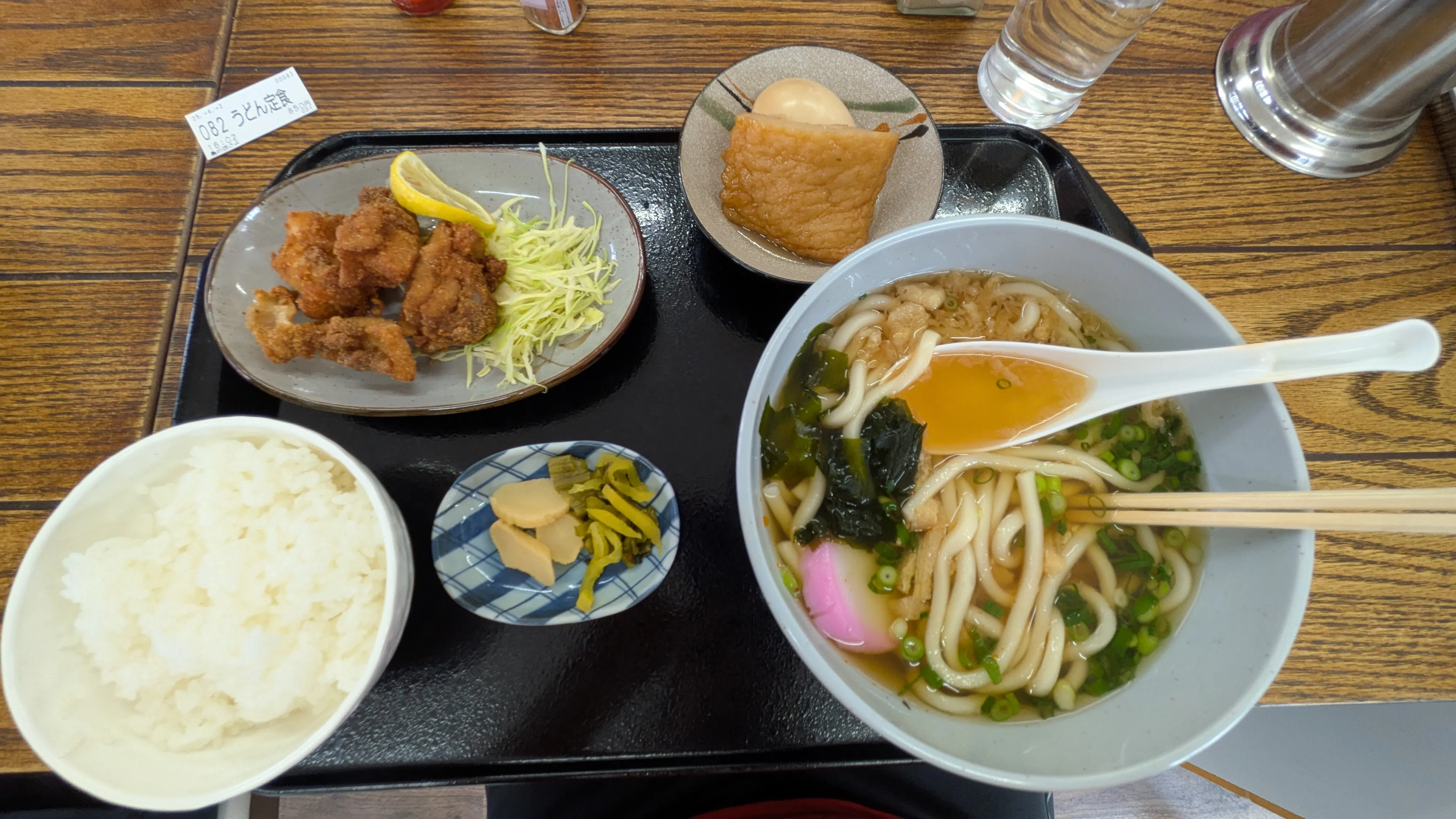
We cruise quickly through Omishima and Hakata islands. The beach campground we planned to use is closed, so we improvise and ride out onto a bridge that has an "exit" to Michika Island. It's a small national park where camping is allowed. There are other travelers around, but it's quiet and friendly.
We ride back into town for dinner and find a great spot serving okonomiyaki. We sit cross-legged on the floor, not my strong suit. As we wait for Leisha to return from the bathroom, Leah does some light stretching in the front of the restaurant. I hide in embarrassment.
First stop at Lawson's for snacks. The interior is bright, clean, and well-stocked. This is more of a mini grocery store than a convenience store. It has trash bins inside, decent automatic coffee, bathrooms, and ATMs. My addition to red bean paste buns begins.
Day 3
Sirens in the night wake us in the night. Is this a tsunami warning? Nope, just emergency vehicles on the road above.
We pack up in the morning. I try my CalorieMate, an impressively cheap and calorically dense, but not very oishii bar-food-thing that I picked up. We edal back up to the bridge and ride the rest of the way across. It's still chilly with the wind and shade.
We cross Oshima and get our first full view of the final bridge to Imabari. It's huge, nearly 4km long. From the top, we can see smaller islands scattered across the bay, and the mainland in the distance.
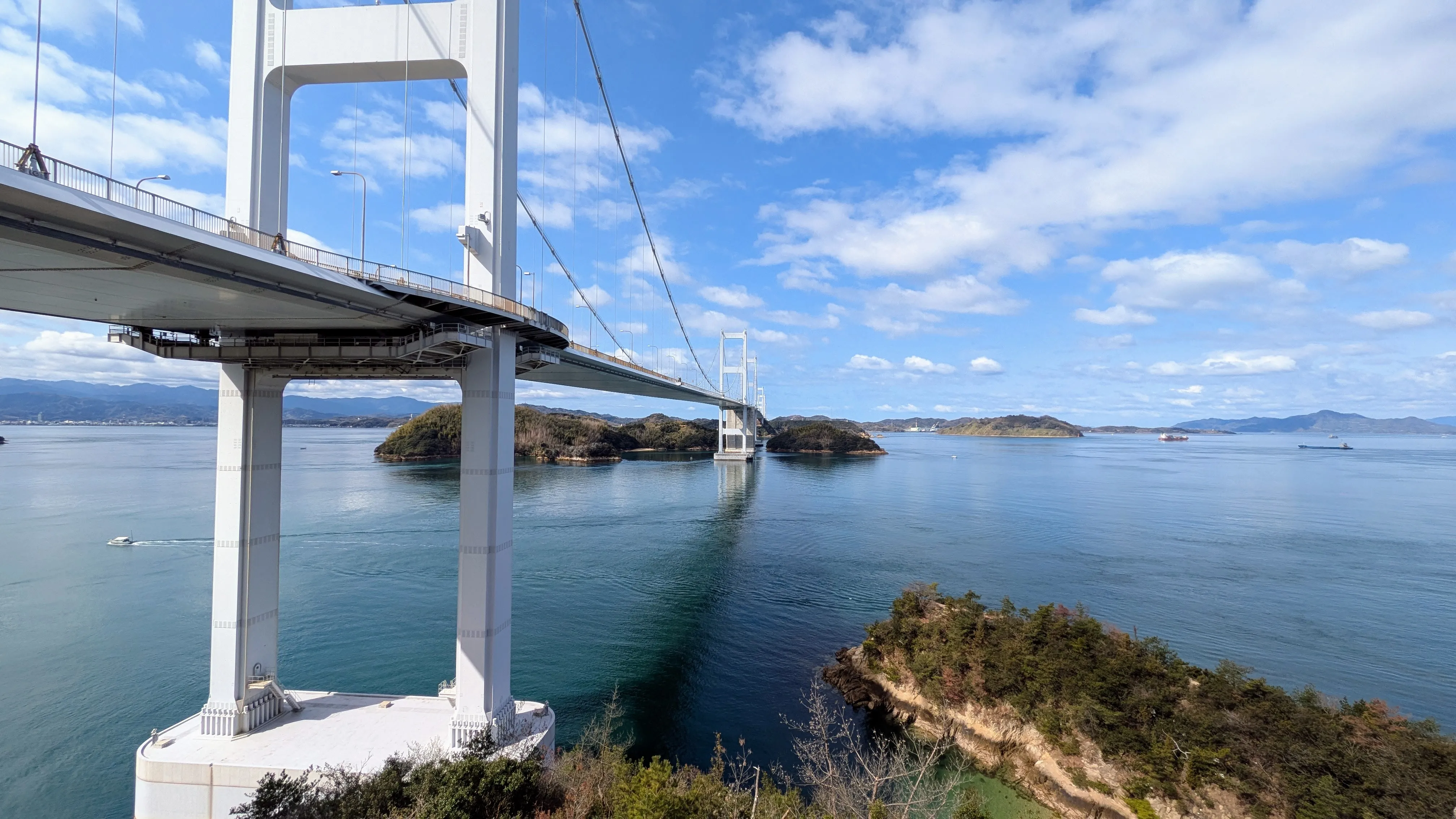
Dropping into town, we see a massive industrial shipping operation. The riding becomes less pleasant and traffic gets denser, with rougher roads and a small shoulder. But the ocean stays just off to our right for much of the way. We pass rice fields and gradually work our way into denser streets, trying to avoid the main roads as long as possible (unclear if our perpetual rerouting worth it).
At the Nest Hotel in Matsuyama, they tell us to just wheel the bikes inside. No hesitation. It feels like way too classy of a place for this, but we oblige.
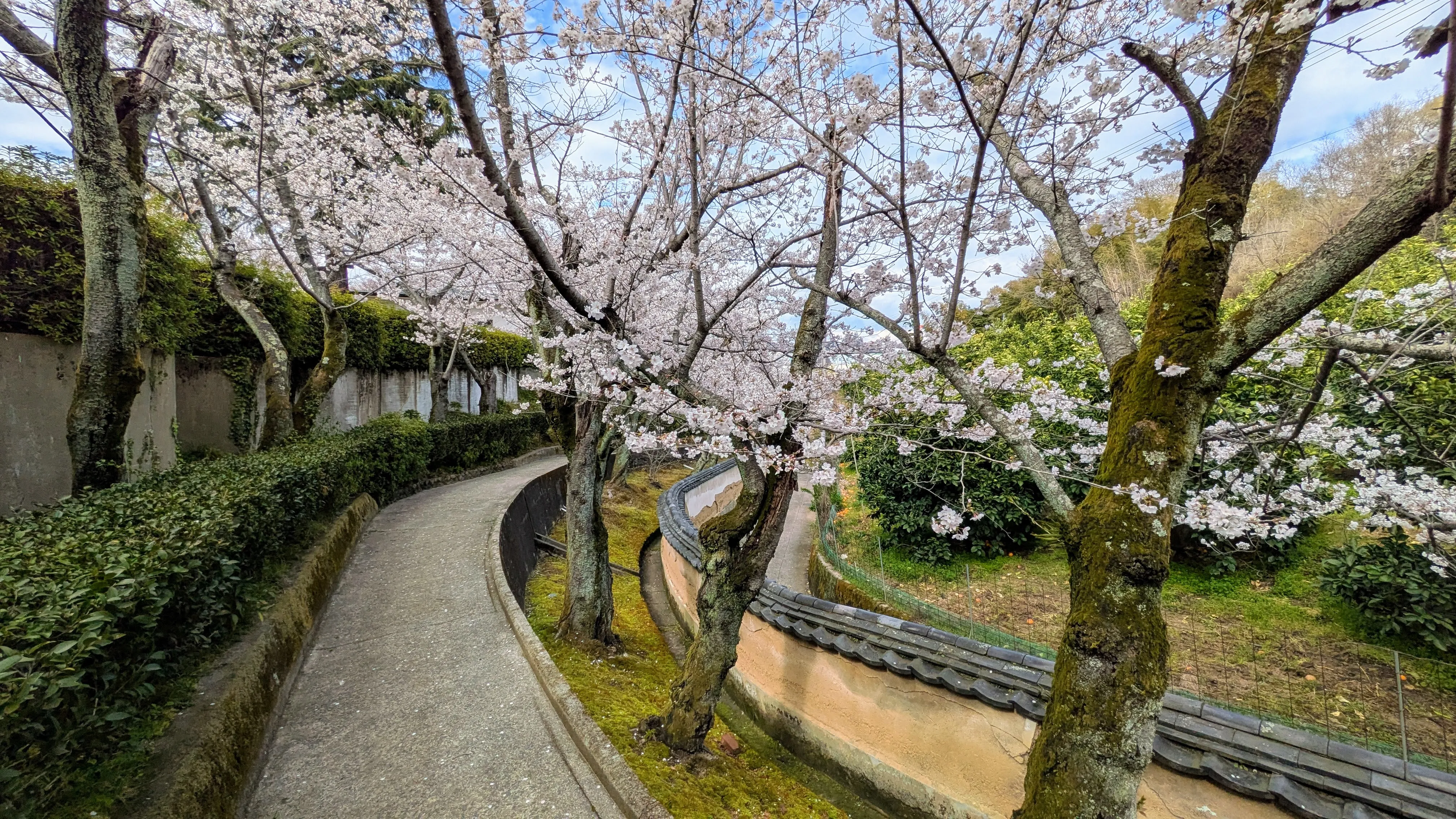
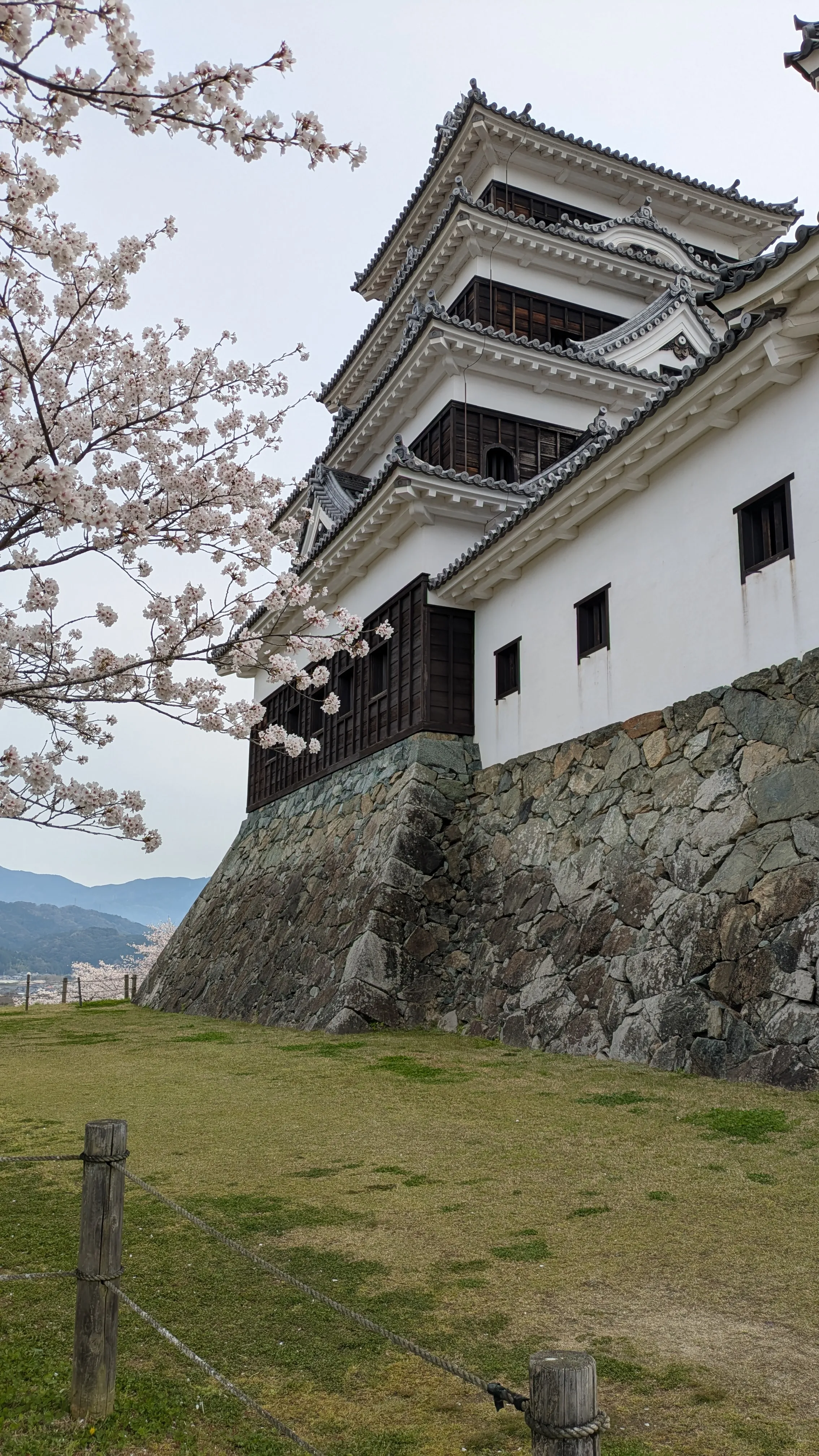
There's some tension about our timing and getting to the Matsuyama castle, so we split up briefly but end up running into each other there anyway. The castle sits on a hilltop in the middle of the city. As we ascend, the land becomes smaller and more vertical, surrounded by large terraced areas that used to hold buildings. There's even a small village inside the walls. The cherry blossoms are incredible.
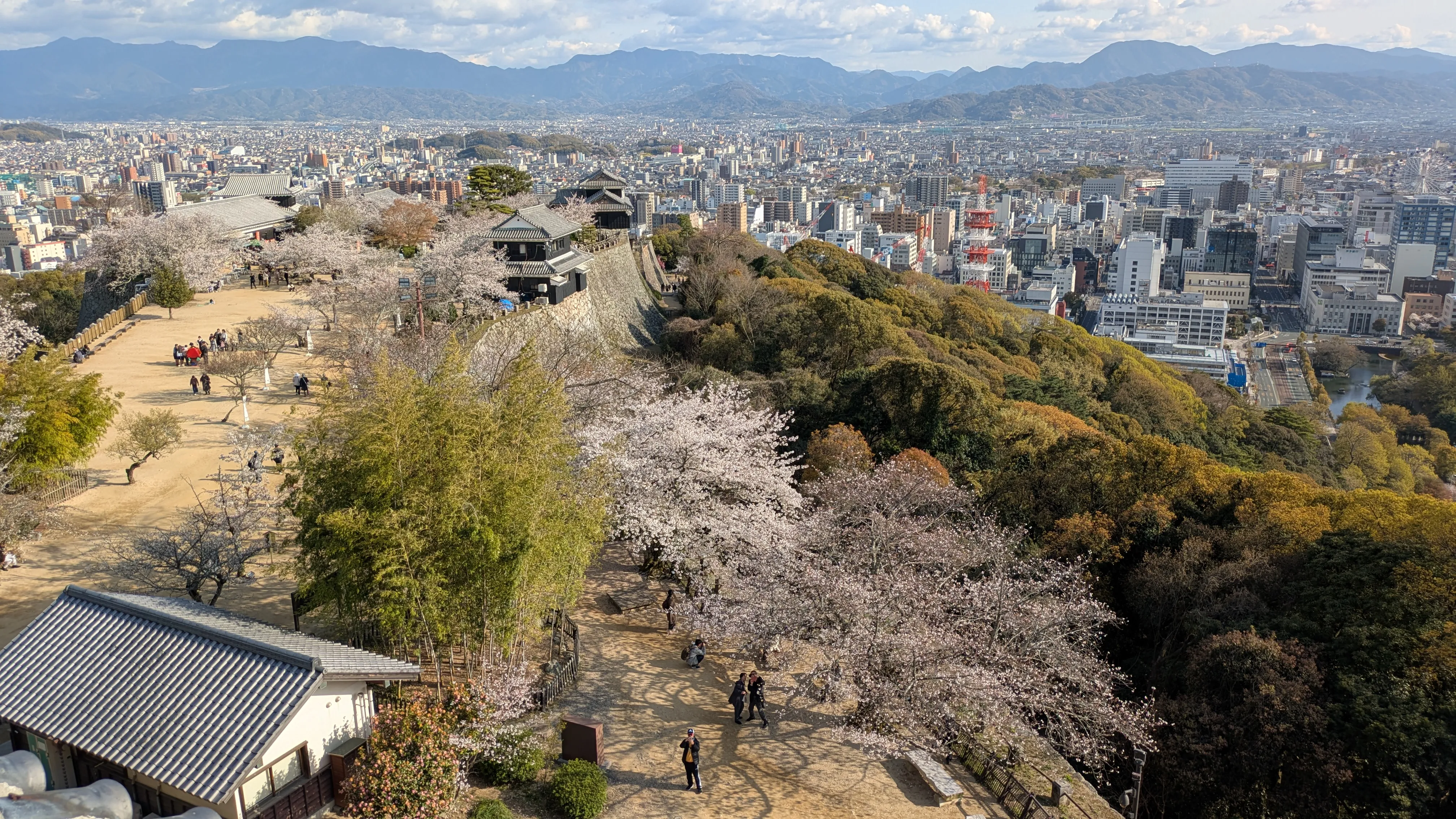
Once inside the castle, I enjoy staring at the the architectural details like wood joints, construction methods, roof contours and shingles. Everything has a purpose and is meticulously crafted.
We walk to Dōgo Onsen through quiet backstreets lined with modern houses and apartments. The streets feel insulated from the busier parts of the city.
The onsen is split by gender, so I'm on my own. One large room: seated showers around the perimeter and a hot pool in the center. It's crowded and everyone is naked. I try to figure out what people are doing as part of the onsen ritual, versus what they are doing as their own personal grooming, without staring too much. I probably get it wrong, but no one says anything. You rinse first, then soak, with a towel folded on the head, then a full wash after. Maybe.
A young guy named Yuuke starts talking to me, keen to practice his English. He's a mechanical engineering student from Nagoya, traveling by motorcycle. He is nervous but very kind. He's excited to hear that New Mexico has hot springs, too. I have accidentally made a friend while naked in a crowded room in a foreign country. This wasn't on my bingo card for life.
I stay in the water long enough to turn bright red, then use the blow dryer on my hair on the way out, because why not.
Dinner next door is excellent.
Day 4
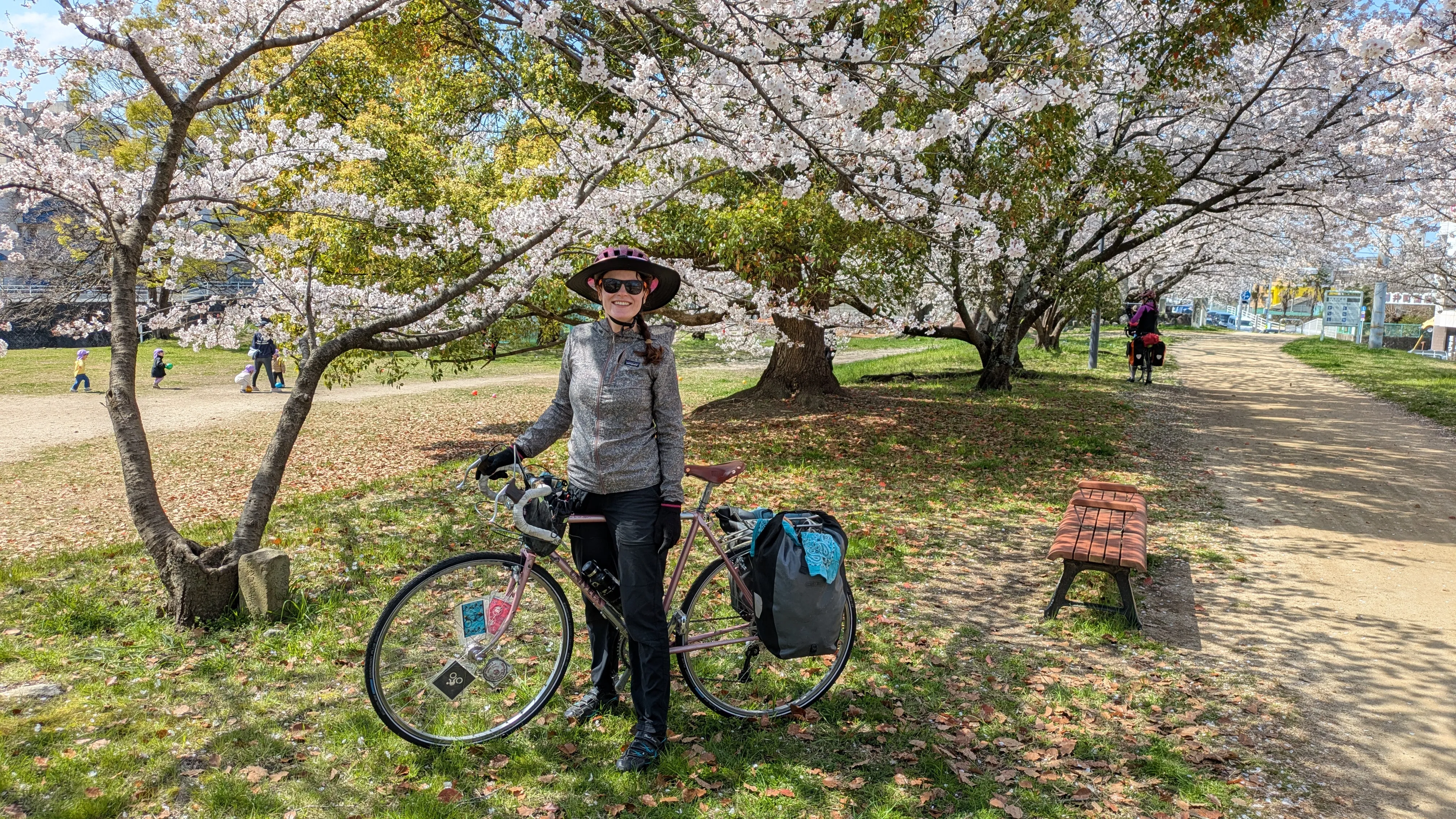
We leave Matsuyama via a canal park lined with cherry blossoms in full bloom. It's a nice way out of the city. Navigation is slow and a bit frustrating at first, then we climb a long hill and drop into an easy cruise along the river toward Uchiko.
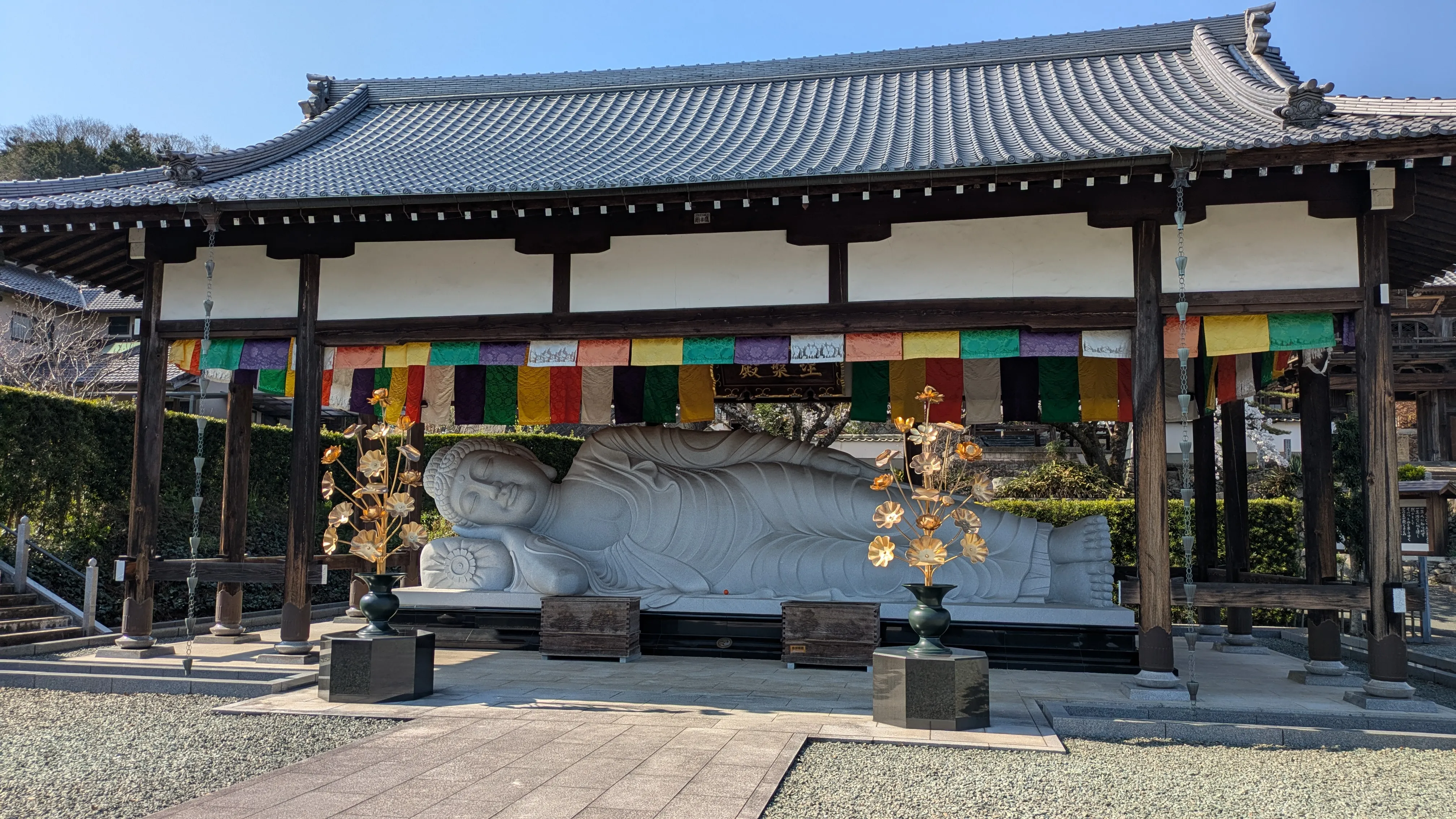
Uchiko has a restored historic main street, plus a temple and a huge reclining Buddha statue. We visit a wax-making family museum as well. We meet a Henro pilgrim from Massachusetts who is enthusiastic about life and eager to recommend things to see — essentially everything.
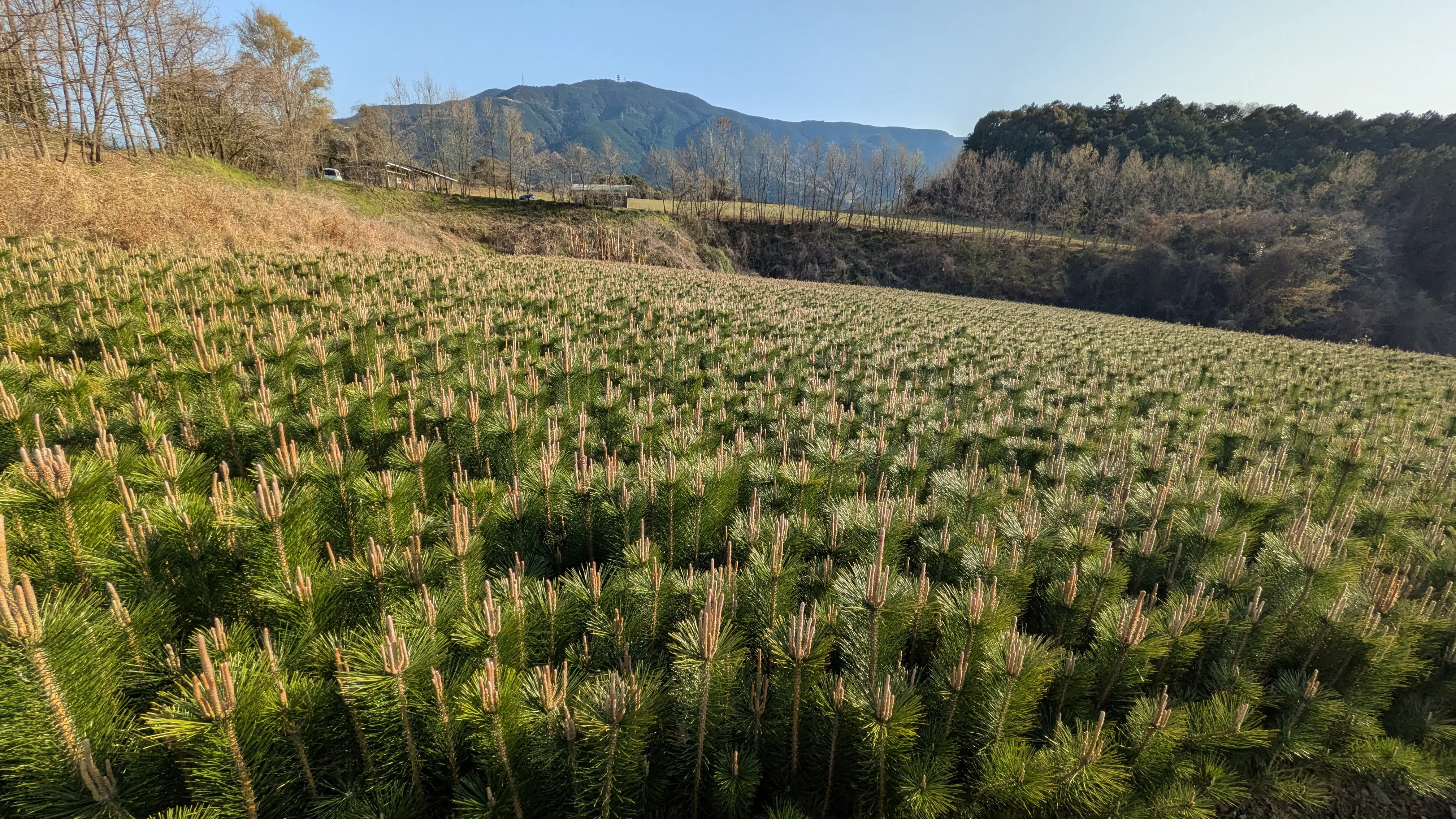
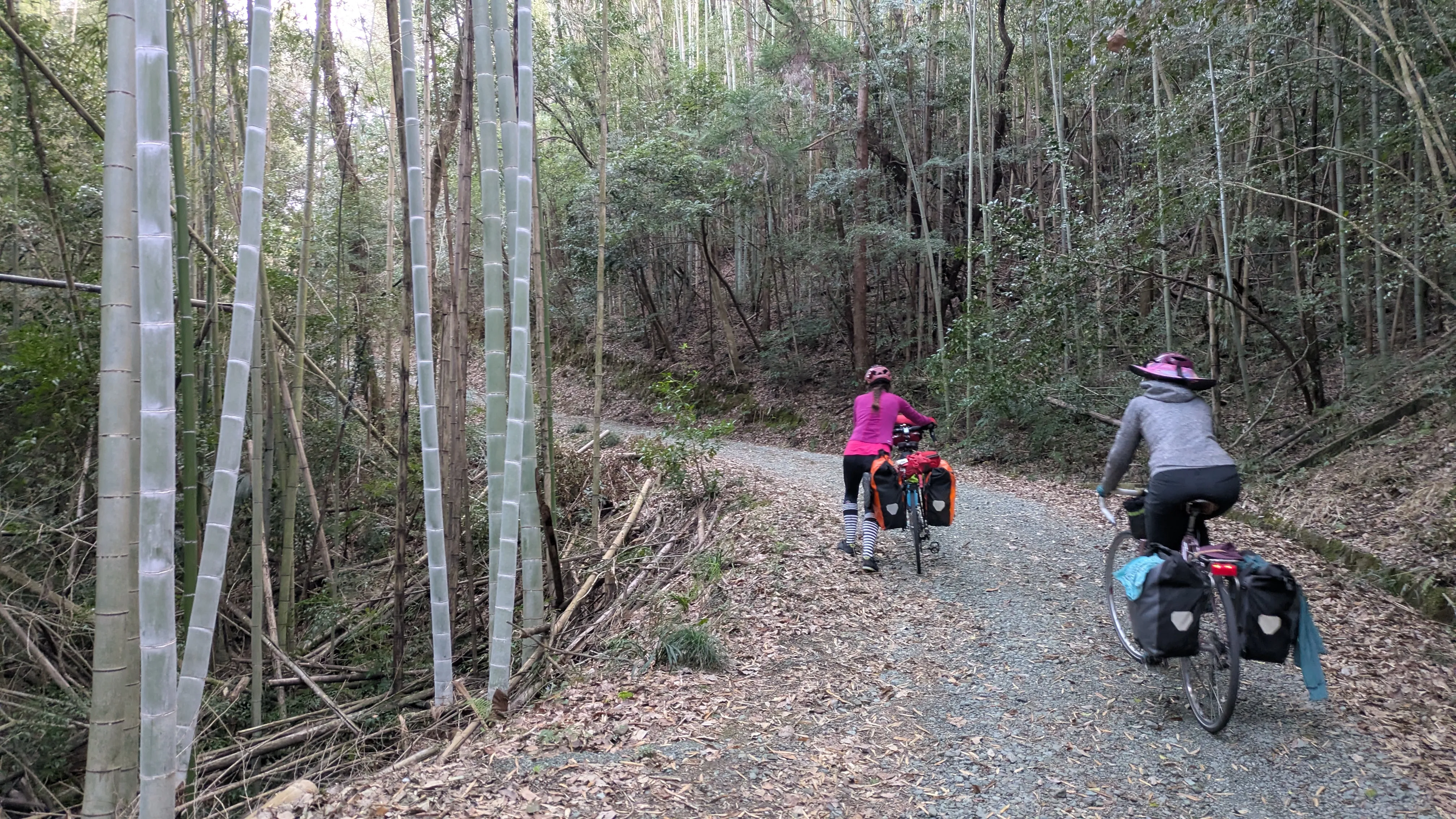
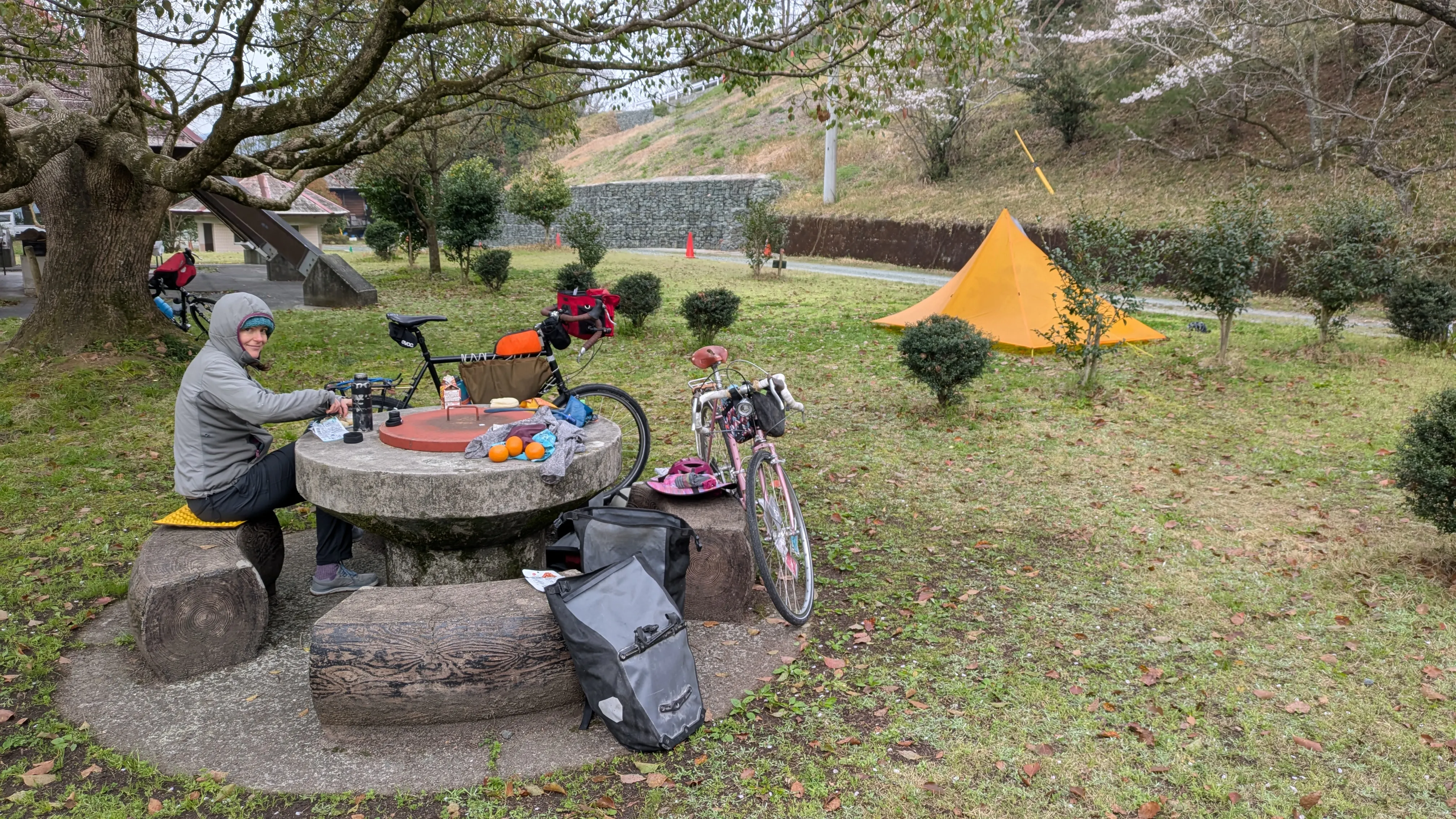
We meander through some back roads and eventually arrive in Ozu. I am not very thorough when planning our daily routes, and haven't realize how high up on a hill our campground is. I suggest we take a shortcut, which ends up climbing even more, before descending, then climbing again. It doesn't seem that bad to me, but I'm solidly in the minority. We hike-a-bike through old orchards and past small roadside cat shelters.
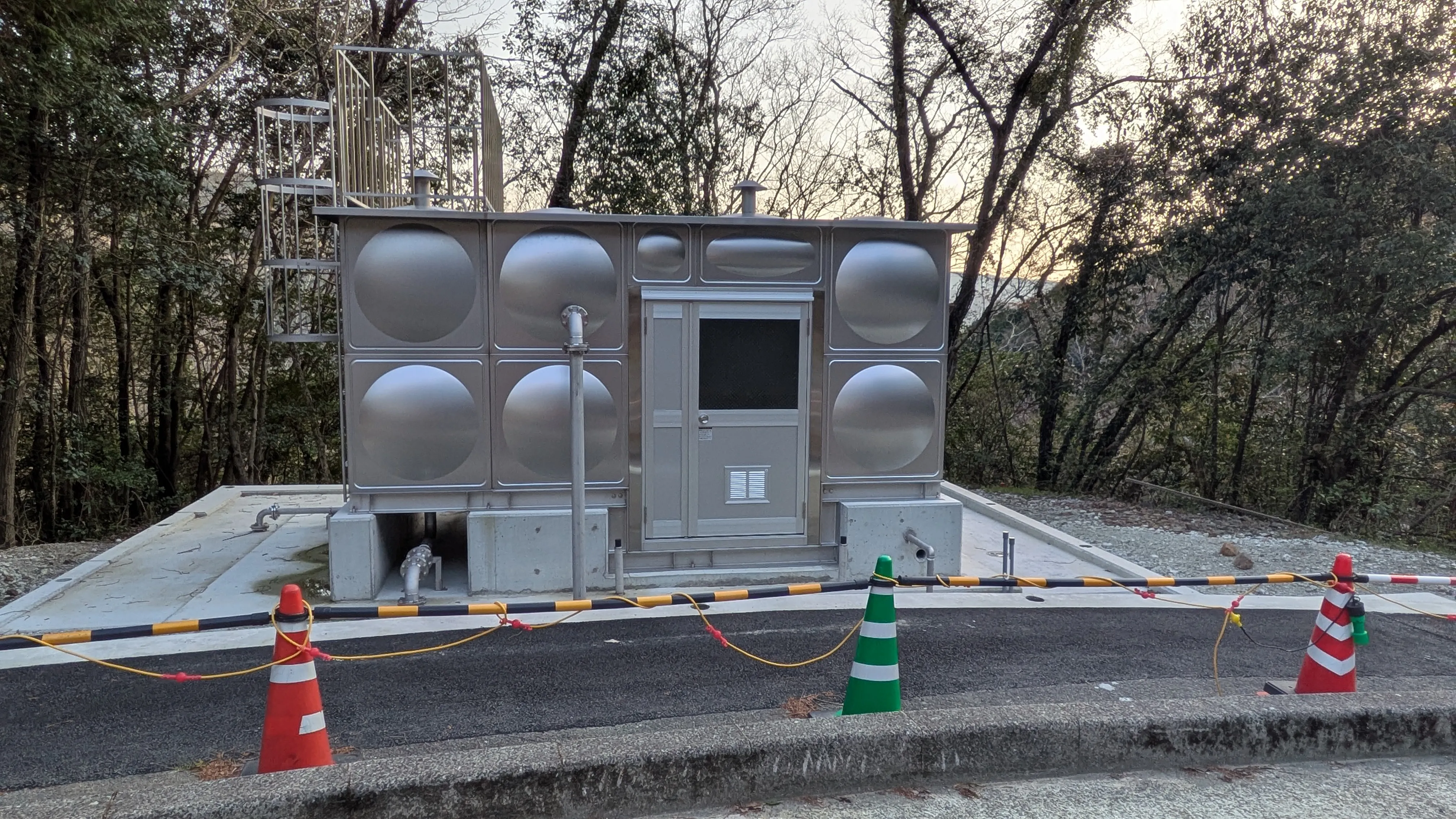
The campground host is very sweet. The bathroom is a primitive concrete structure, but still has a heated bidet. Views out over the Ozu valley below are beautiful.
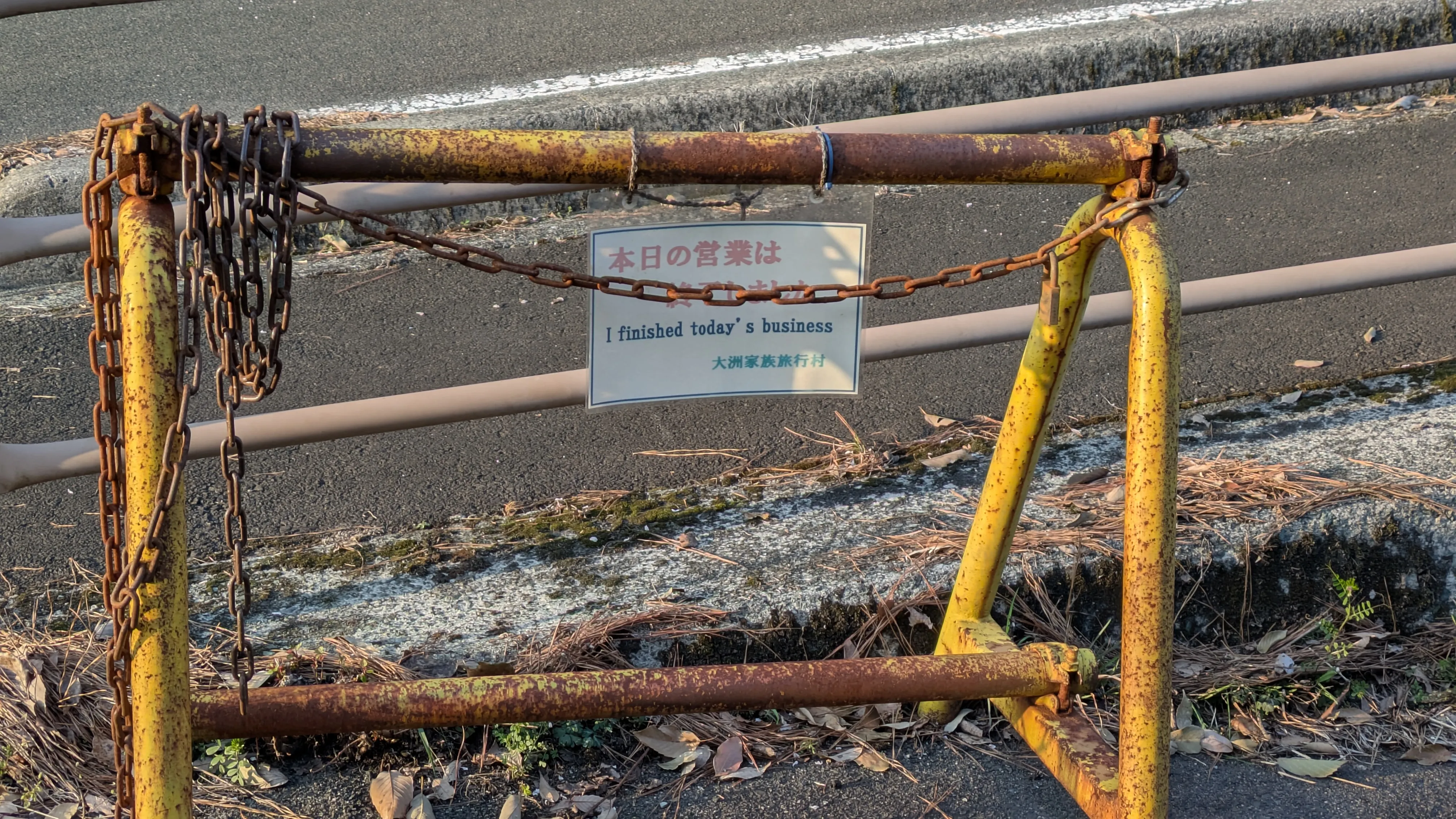
We ride back down into town through the forest on the mountainside and find an amazing restaurant. Seven-course omakase: grilled prawns, thin fried tofu, sashimi, chicken skewers, whole amago river fish, okonomiyaki, matcha ice cream, and finally beer. We ride back uphill to camp afterward. Not ideal, but at least it warms us up.
Day 5
A long day—65 miles—because our original camping plans fell through and I booked a place 10 miles farther down the road. It seemed insignificant at the time.
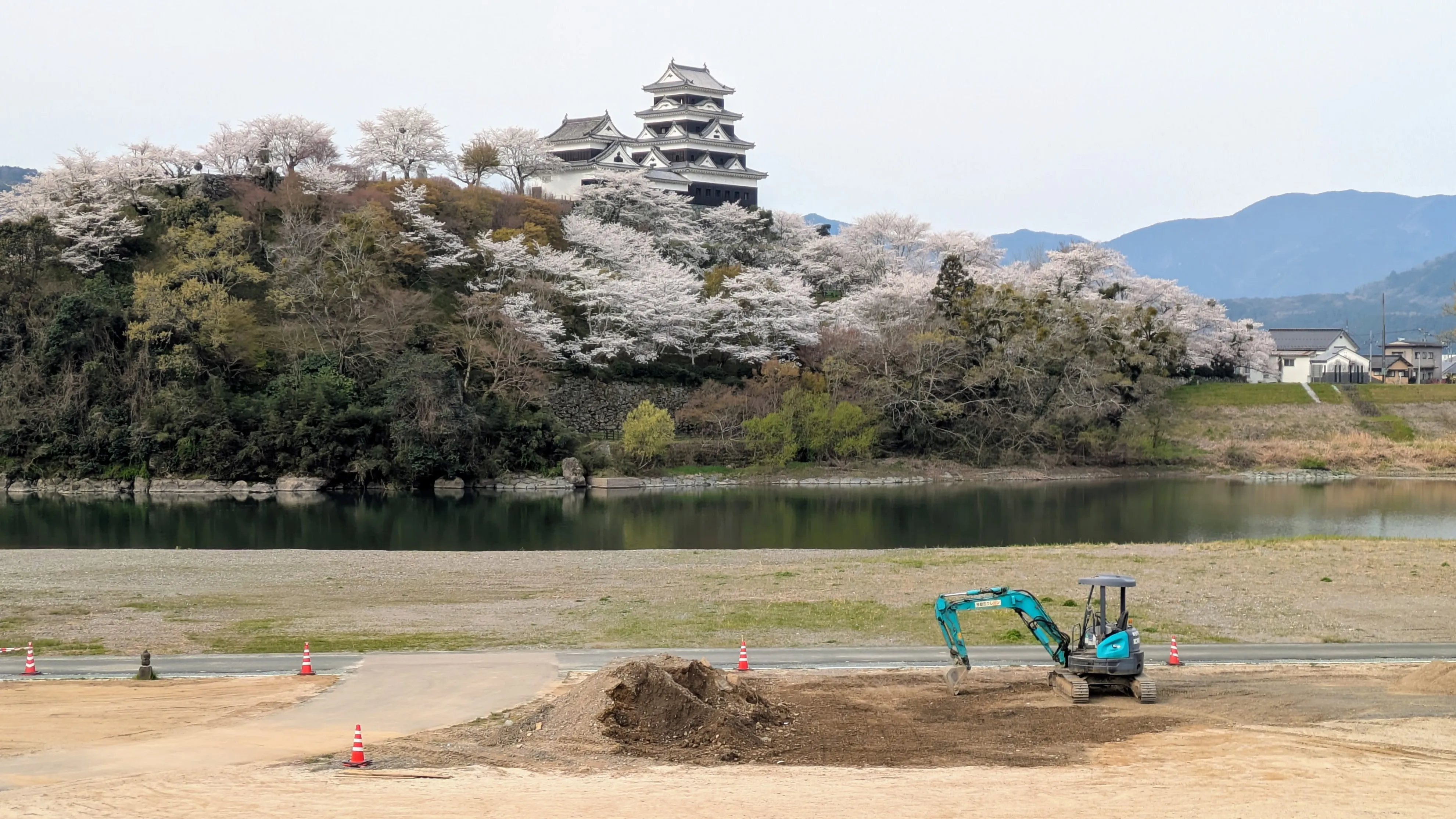
We start with the downhill from camp, then visit Ozu Castle. It's not open, which is fine — we mostly wanted the view and the cherry trees.
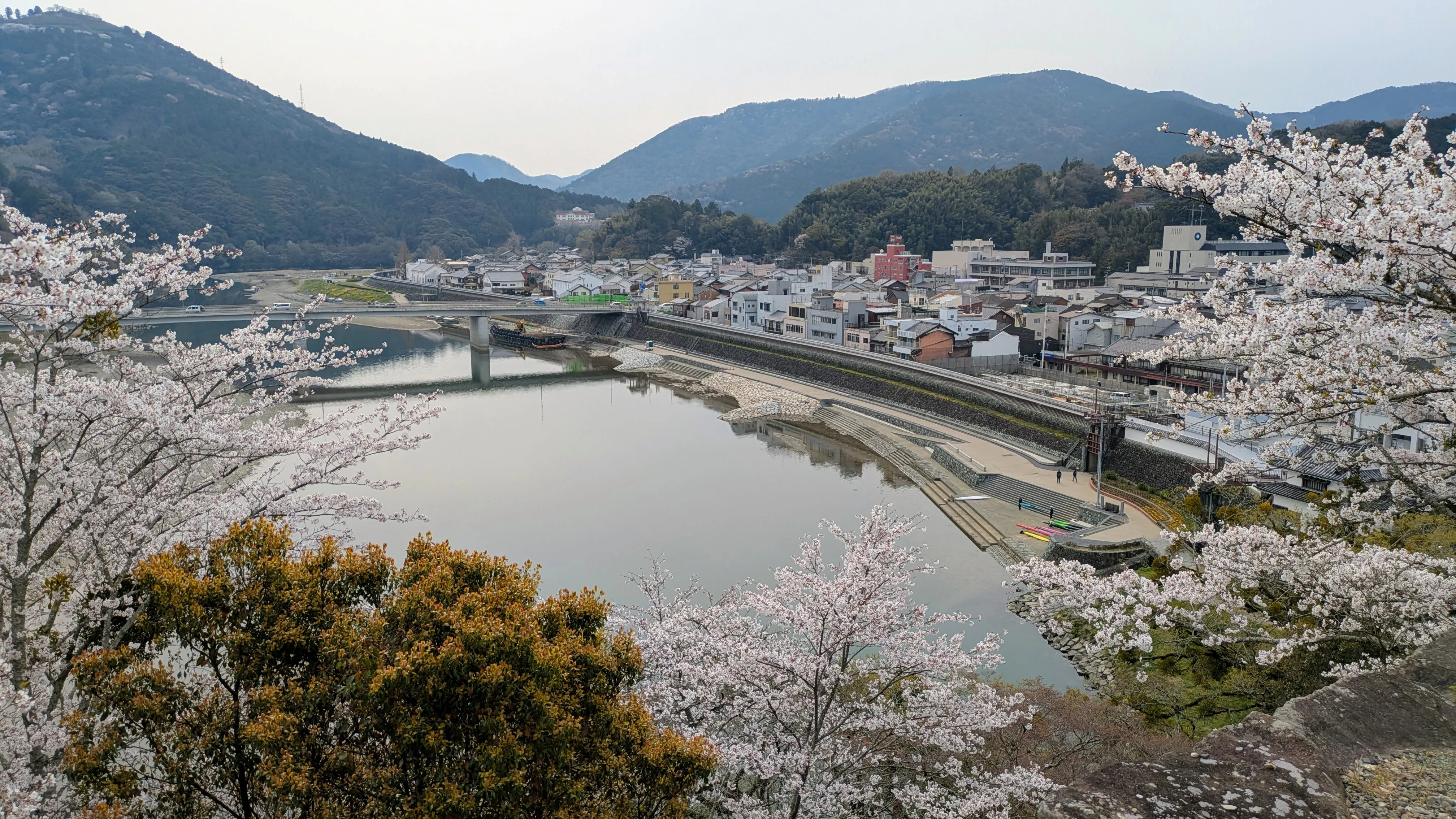
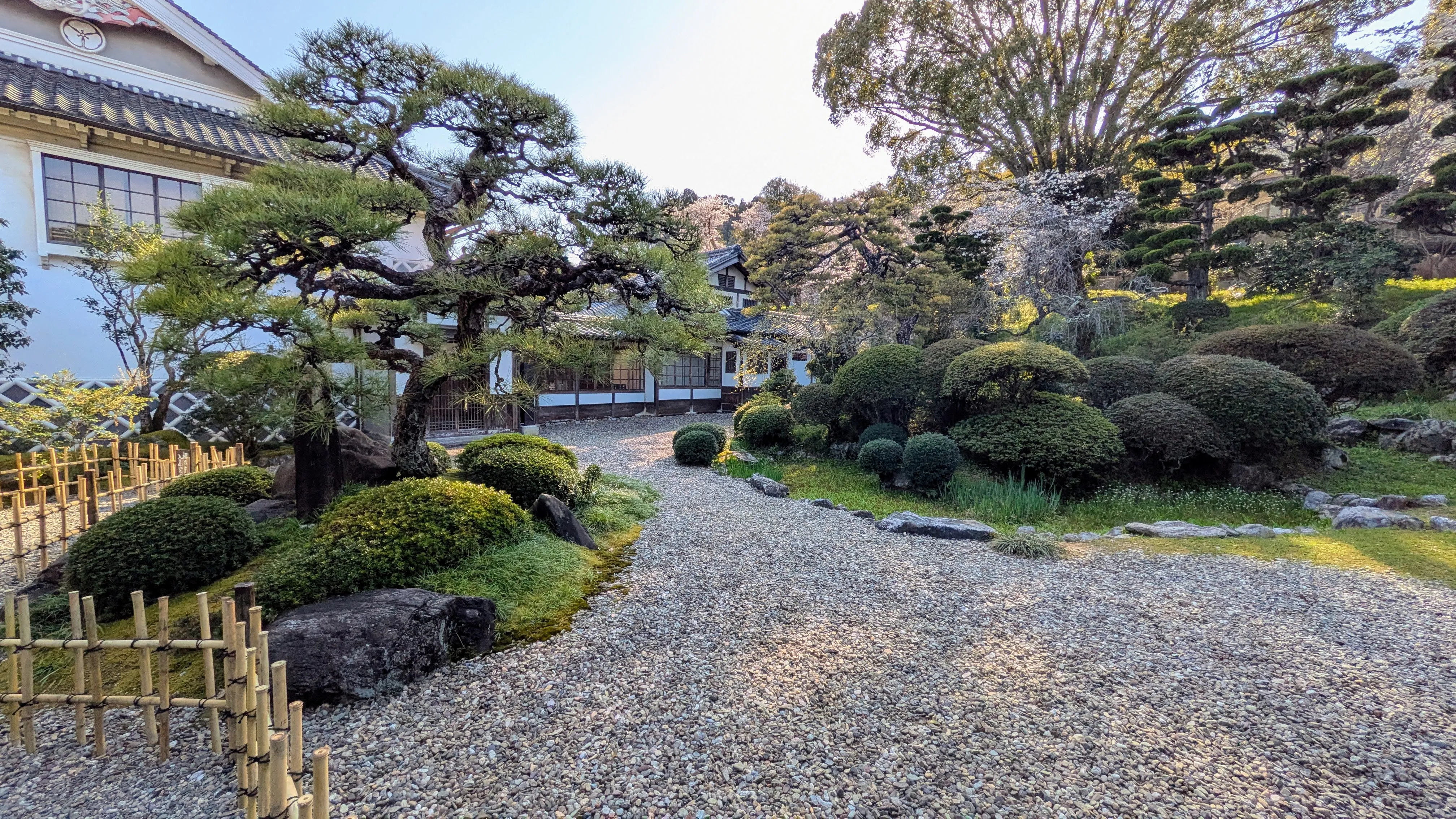
We also visit Garyu Sanso, a private residence from the 1800s. It's beautiful in a quiet way, with lots of small, intentional details. Architecture designed for relaxation and entertainment. There's an employee brushing leaves off rocks and moss—it seems like a daily task. We get an inadvertent guide who gives us a short tour. The wabi-sabi philosophy is interesting, it presents an interesting contrast to how precise and maintained everything else is.
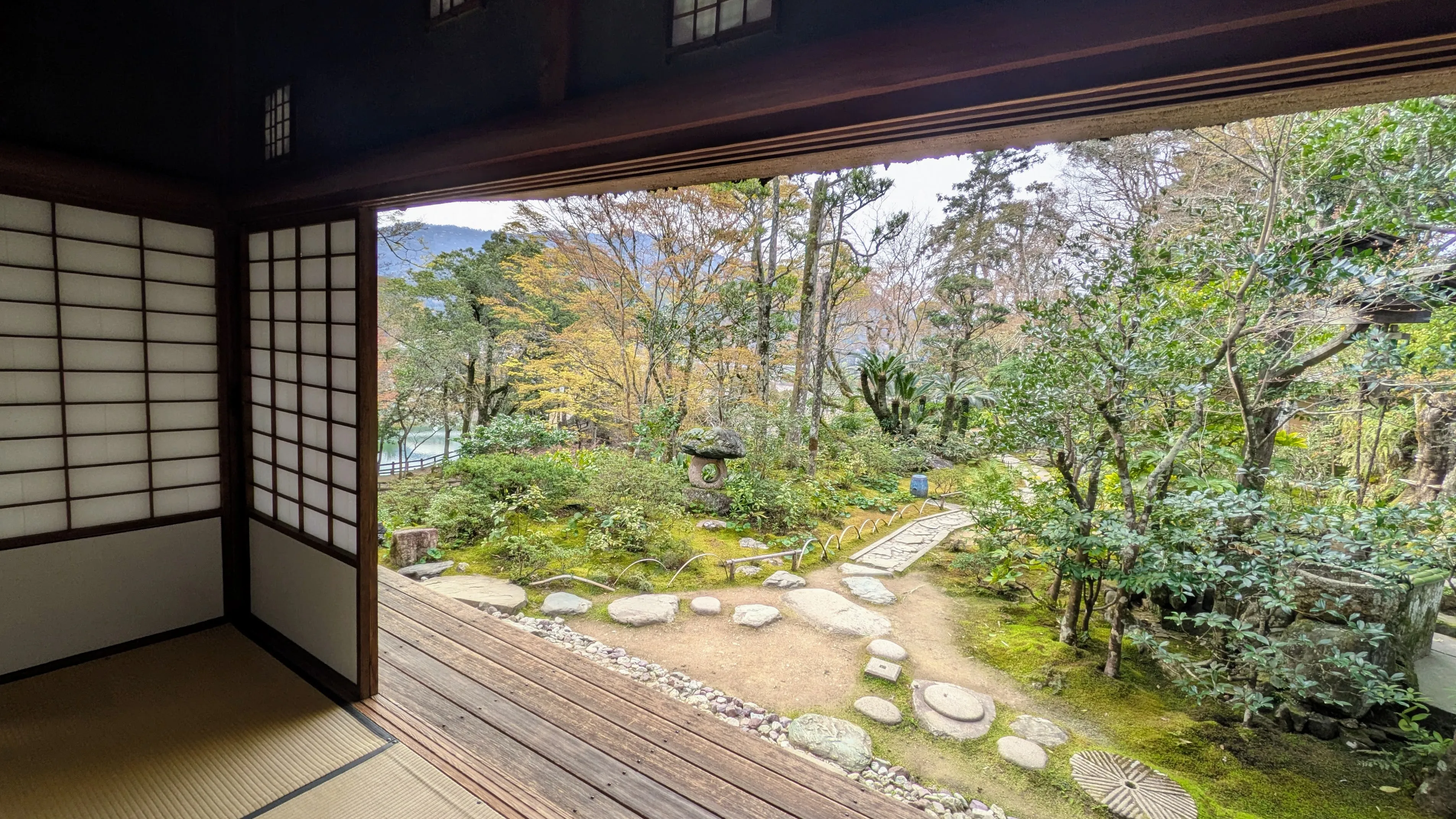
The riding is steady: climbs, tunnels, long descents along the river, through rice fields and wide valleys.
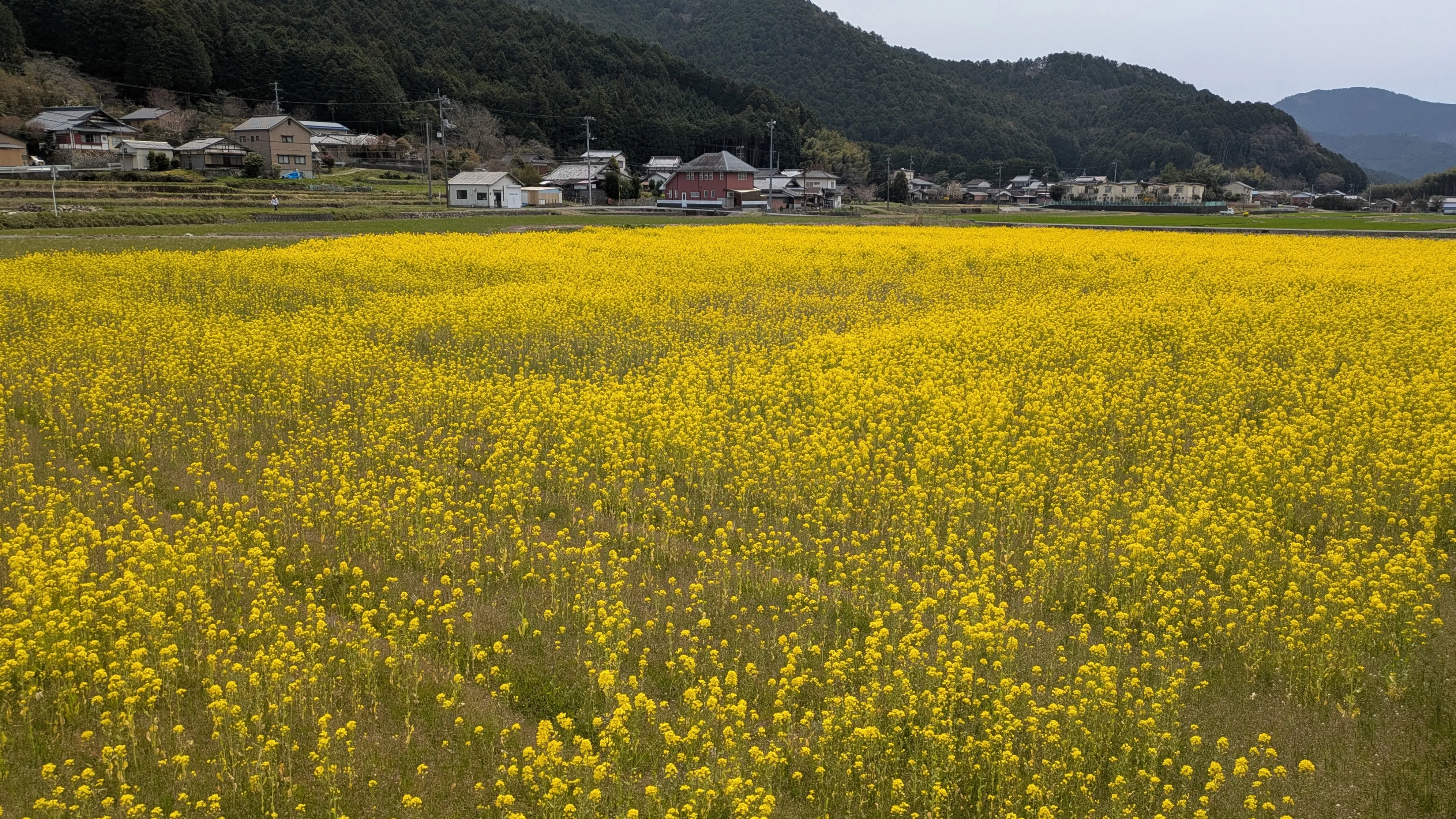
We arrive in Sukumo and stay in a small guesthouse with thin walls. The owners are very kind. We wander through quiet, nearly empty streets by the harbor and find a yakiniku restaurant that feels very local. They're friendly, as usual. It's a bit pricey, but delicious. We plan to eat there, and then go to an okonomiyaki place near the guesthouse for more food since we're low on cash, but it's closed when we walk by.
Back at the guesthouse, the hot water stops working for Leah. The owners sort it out over the phone around 9 PM. It turns out there's just a hot water heater switch on the wall that we needed to press to turn it on.
Day 6
A huge thunderstorm overnight—loud enough that it feels like an earthquake at times. In the morning, it's noticeably warmer and more humid. Rainwater is steaming off the pavement. We walk to a café run by the guesthouse and have an American-style breakfast by the water — ocean or bay, I'm still not entirely sure.
We start thinking about logistics. Leah and I consider taking a rest day and possibly hitching a ride or taking the train to Kochi to make up time. Leisha still wants to ride both days.
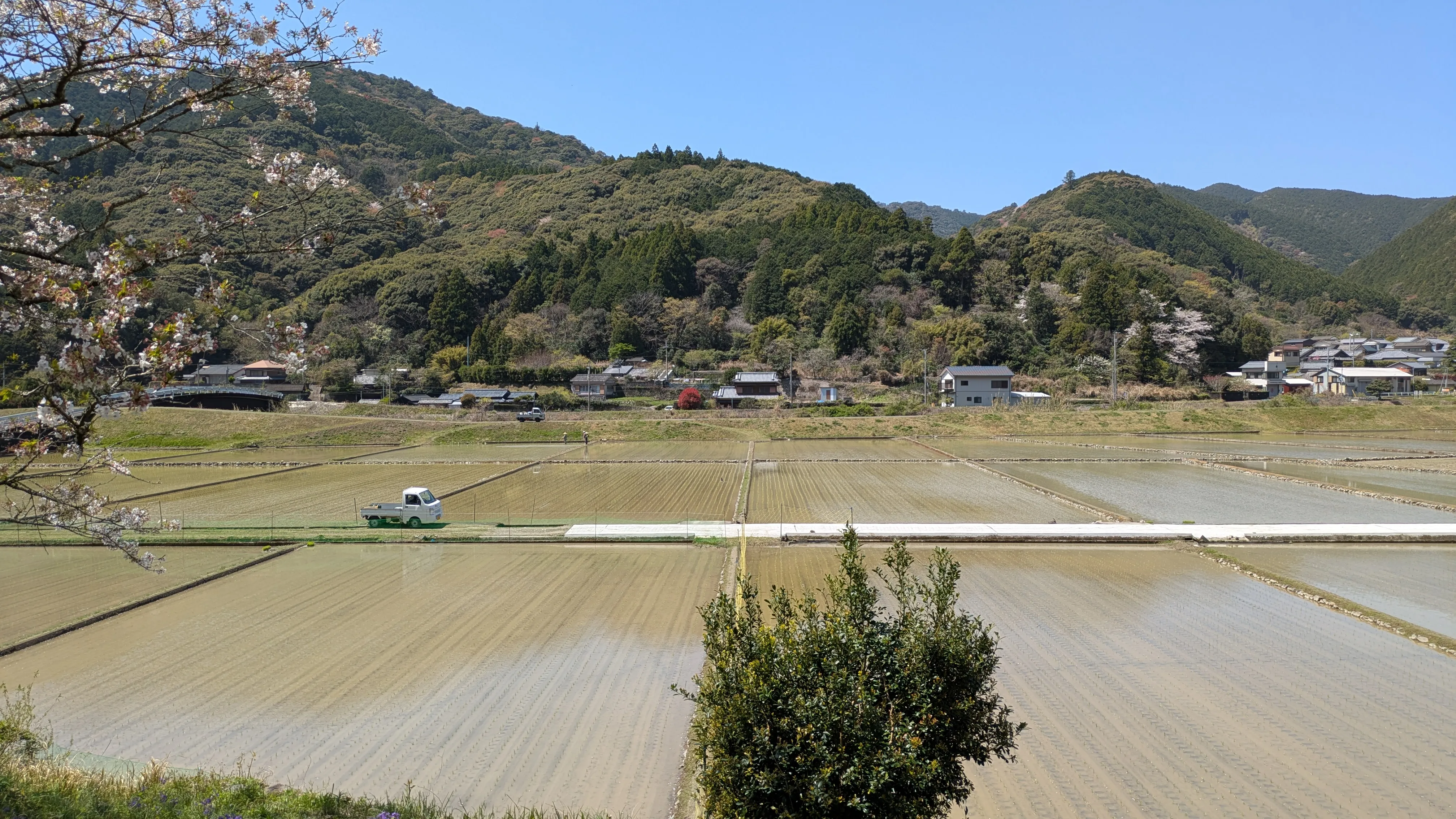
The ride begins along a beautiful coastline, then turns inland on Route 28 to avoid wind and traffic. The climb is manageable, with quiet roads winding through evergreen forest and past a large bridge construction site. We descend back toward the coast, stopping to look at large rice paddies and wondering how they're planted so precisel. By hand? from seedlings?
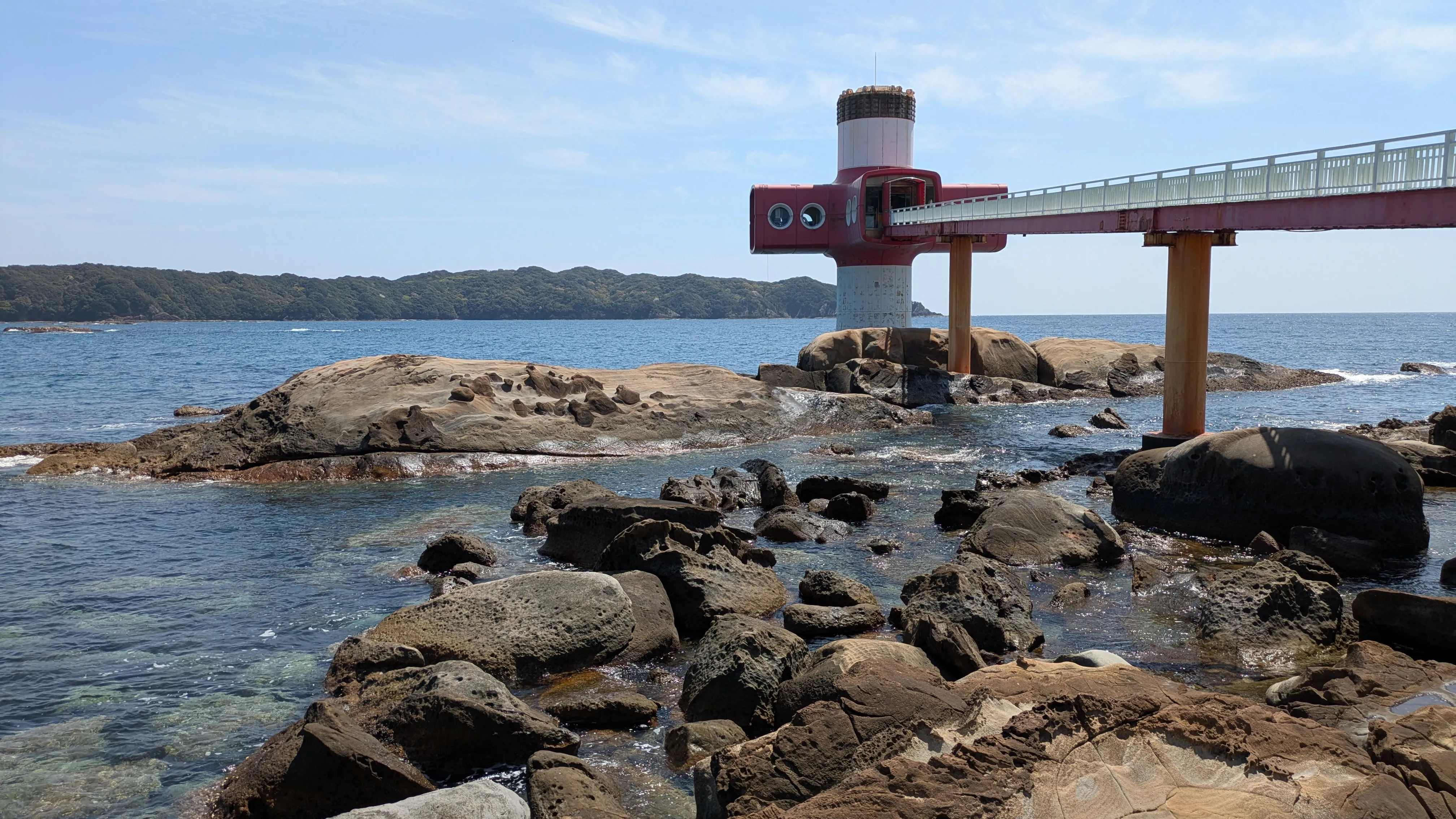
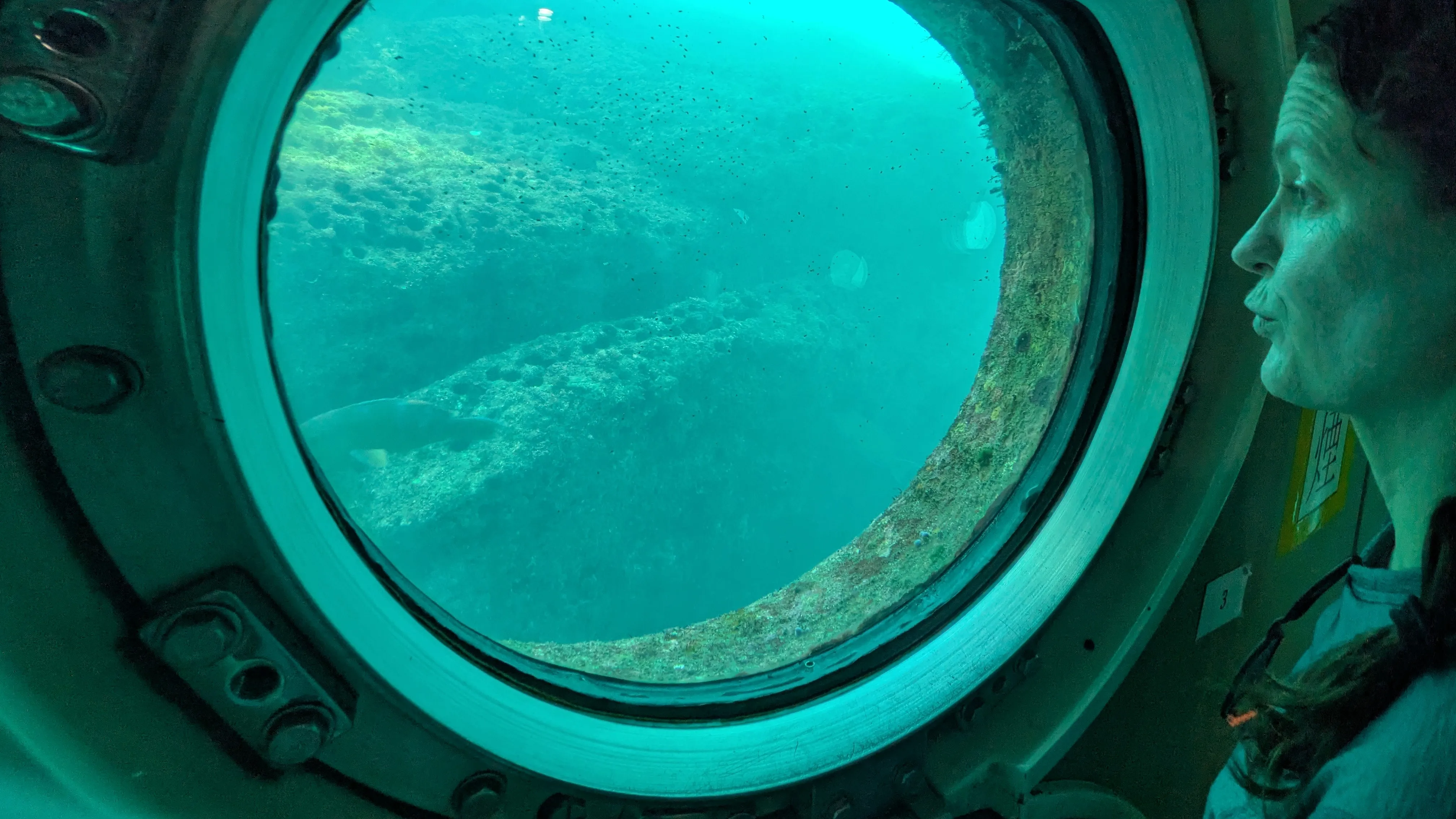
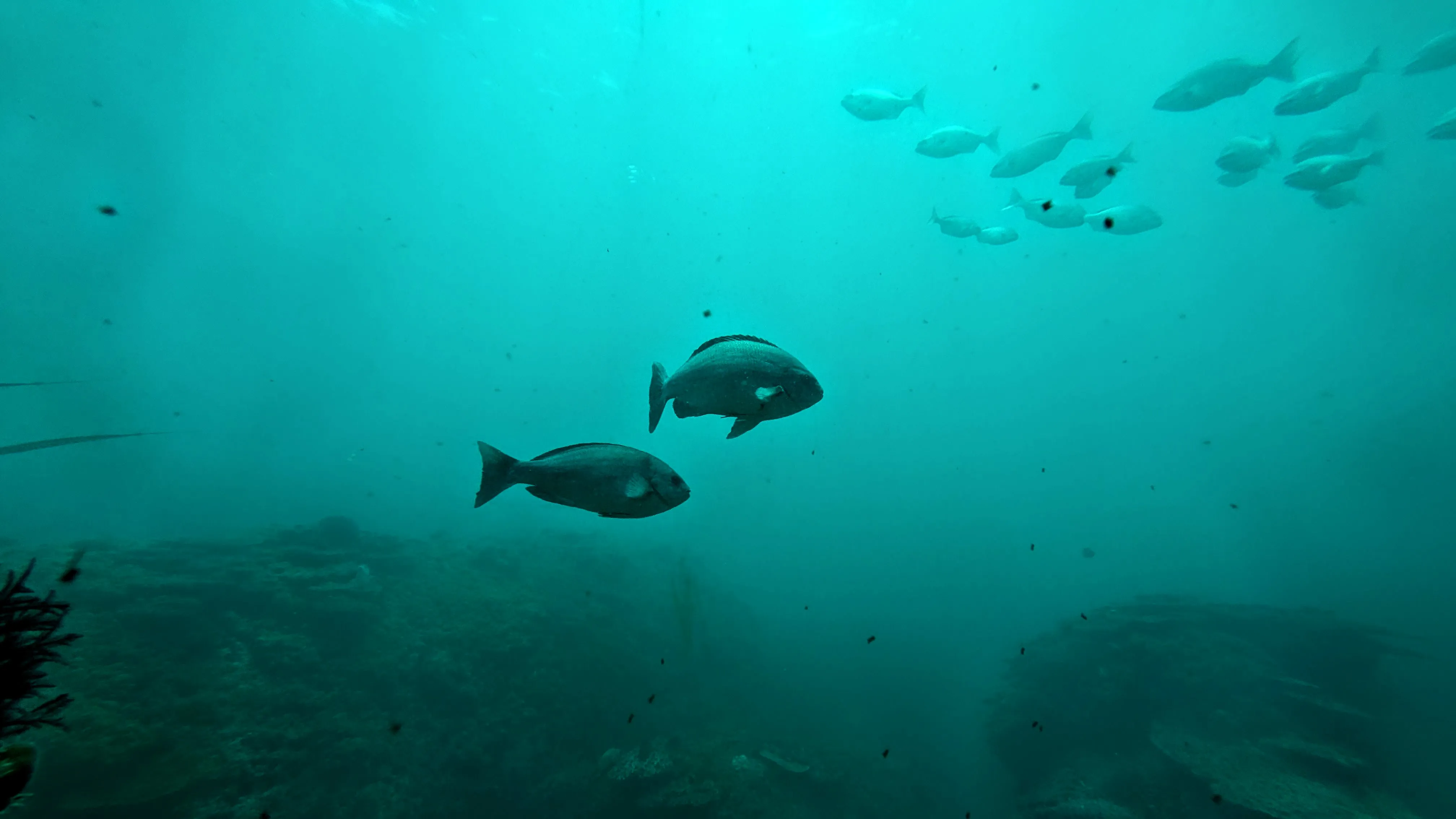
We reach a rocky stretch of coastline with small islands and beaches and stop at an underwater observatory. A narrow path leads out over the rocks to a metal structure where you can look through portholes about 20 feet below the surface. Lots of fish and marine life. The building looks like something out of an old comic book. Nearby are some oddly shaped rocks, labeled simply as "strange rocks" on the map.
The towns are small and quiet. We stop at a grocery store in Misaki and eat lunch in a beachfront park overlooking the water, a breakwater, and what look like remnants of old wartime defenses.
The road dips inland again, then returns to the coast through Tashimizu and around Cape Ashizuri. The landscape becomes more dramatic—jungle-like vegetation, cliffs, deep blue water. For the first time, the ocean really feels like the ocean, with open views out into the Pacific.
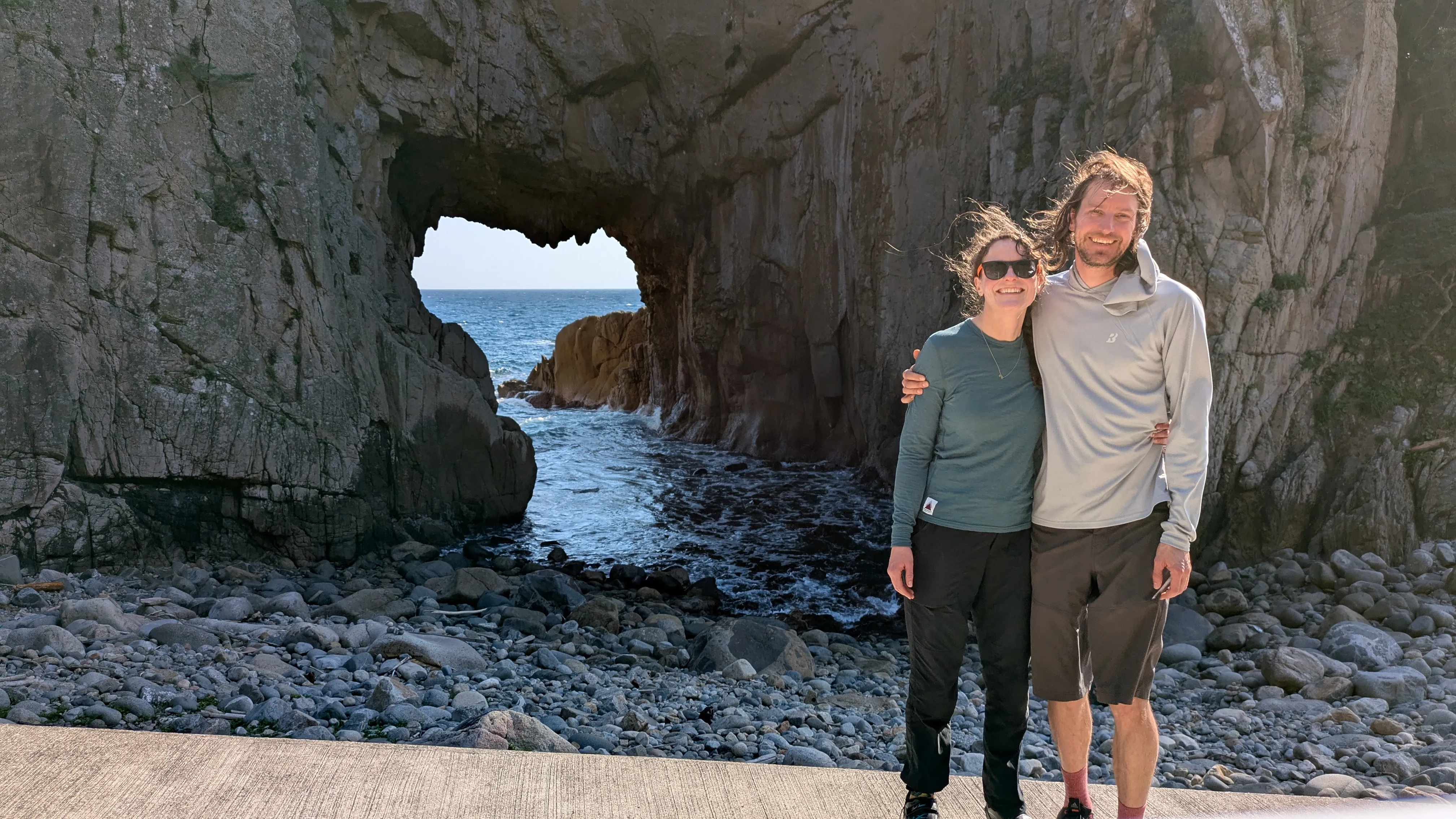
We hike down to a natural rock arch that forms a heart shape from a certain angle. There's a permanent camera stand installed for people to take selfies in front of it. Lots of stairs down to the rocky beach, but worth it.
Kongofukuji Temple is busy and well maintained — the first temple that feels "fancy." Tour buses come and go, and there are souvenirs for sale.
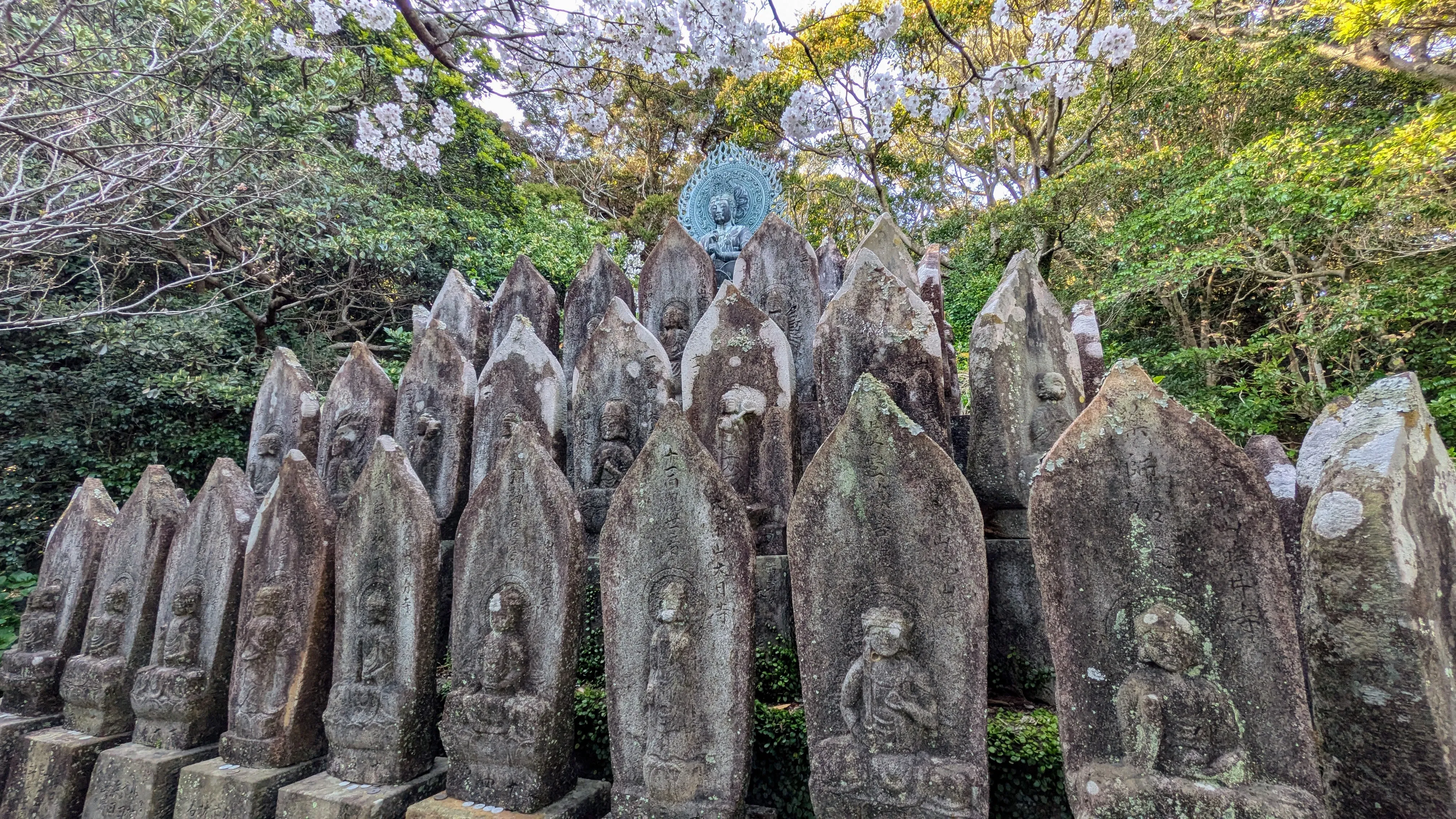
We round the cape and head toward Ohki. Passing through a small town, we hear the hourly bells ringing from public loudspeakers mounted on towers. The music is playing from multiple locations, so as we move, the doppler effect causes it to shift in and out of sync between speakers, creating a strange effect.
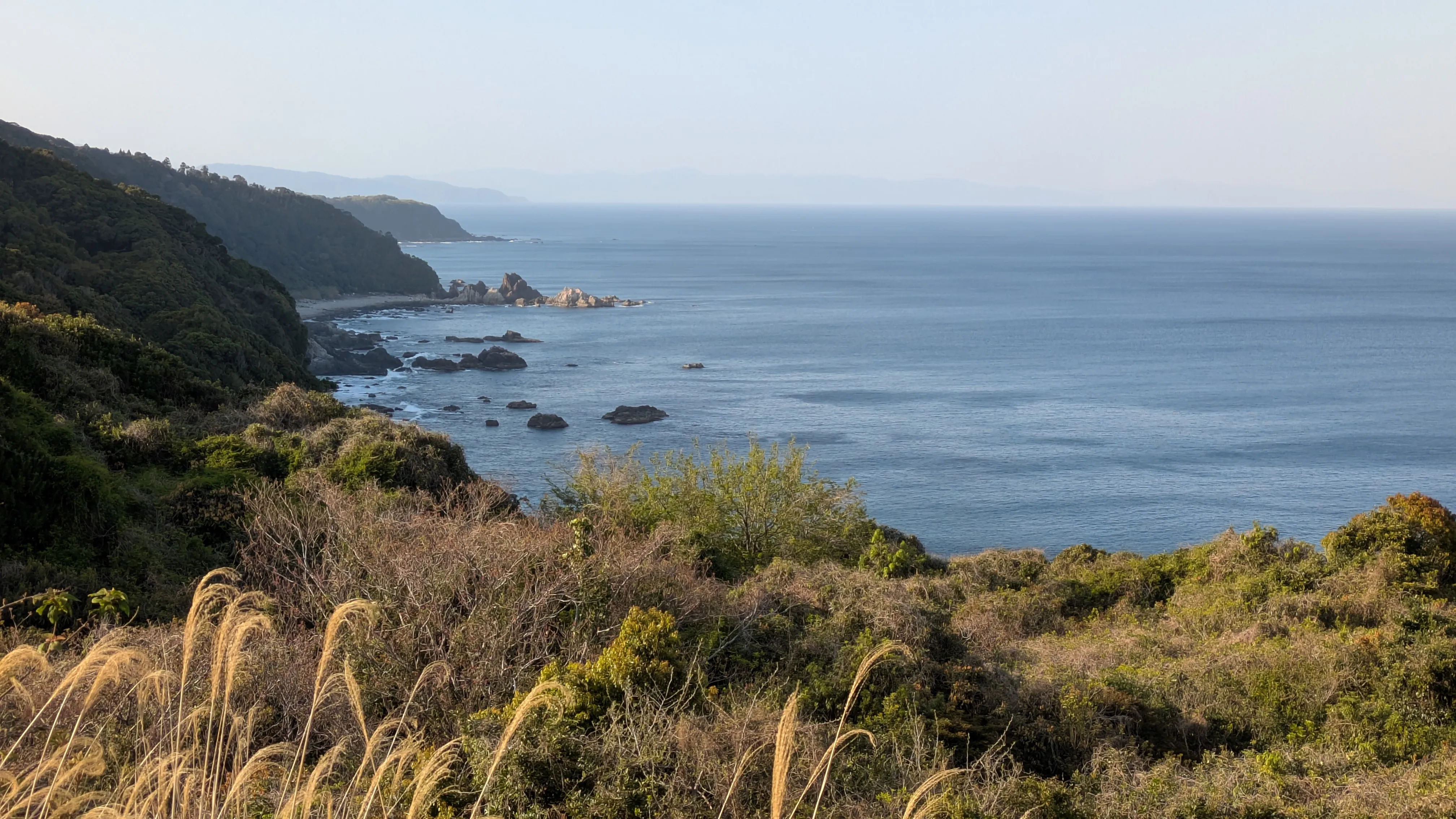
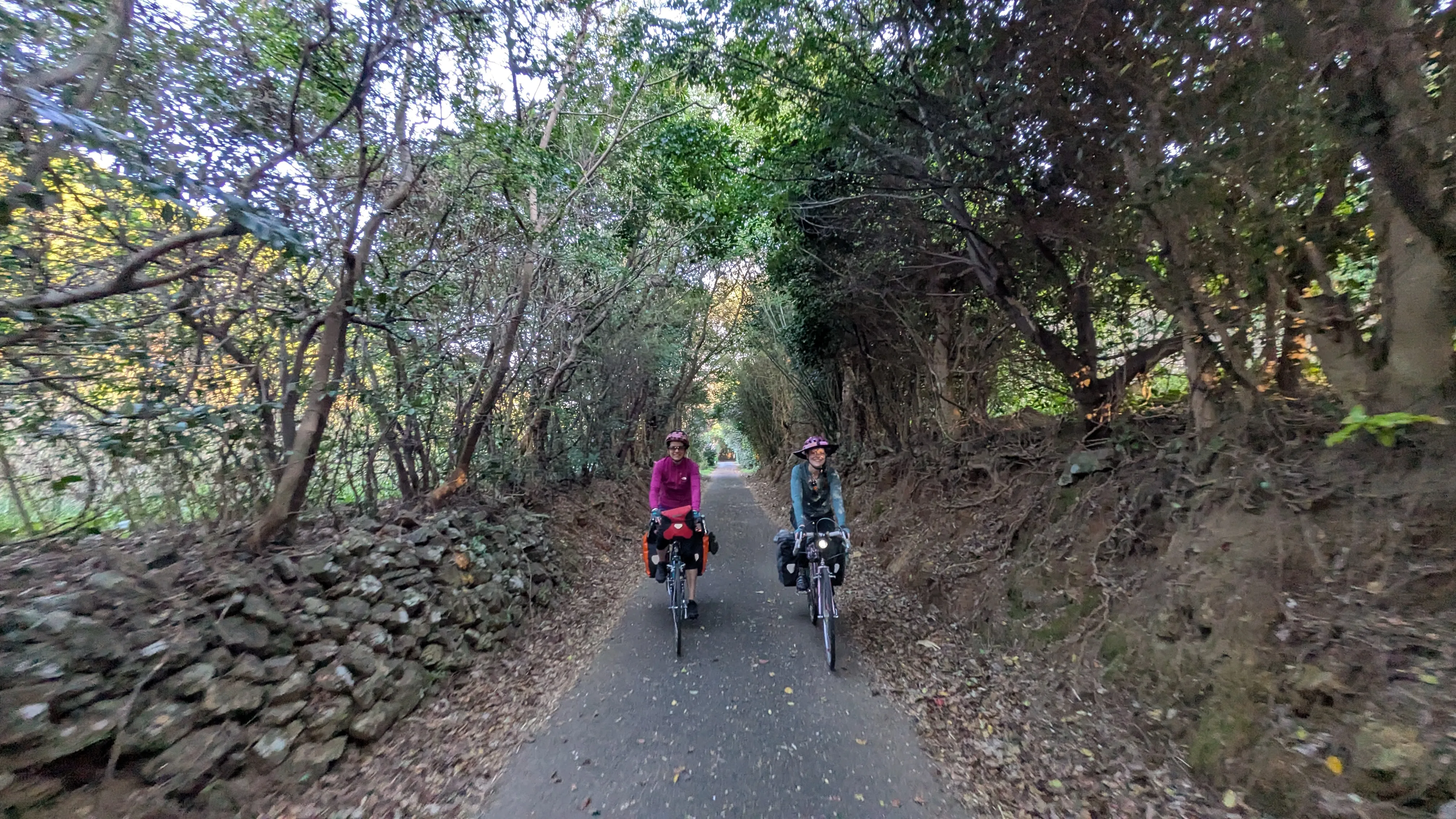
We take a small exploratory shortcut to avoid heading back inland. The road is narrow, shaded, and quiet—almost no traffic. It feels like riding through an enchanted forest. The light is getting low as we pass occasional houses with sprawling gardens, sheds, barns, and abandoned cars. It feels like a strange mix — between Japan and where I grew up in Falls Village, CT.
We rejoin the coastal road just before dark. A few more miles into Ohki, where we see our first tsunami refuge tower — large and imposing in an otherwise flat beach town.
We need to find a place to camp quickly. The only food option is a small food truck. We ask (mostly pantomime) and they suggest camping further down the beach. We set up quickly and ride back for food before they close. The people at the truck — an older man and a younger woman — wave and shout enthusiastically as we ride away with our food. A good end to the day.
We eat by the tents. Later, Leah and I walk along the beach in the dark and talk for a while. Occasionally a wave comes up farther than expected and we have to run quickly away from the shore to stay dry.
In the middle of the night, a strong gust of wind shakes the tent. Leah suddenly sits upright and flails an arm, hitting me in the chest. I half-wake up, try to calm her down, and then go back to sleep, completely unaware that the tent was partially collapsing and she was trying to fix it. I thought she was just having a bad dream.
Day 7
We eat breakfast at a small café by the beach. Three older men sit around chatting like they've been there all day. Two older women run the place. Posters of cats, an old prime minister (maybe), and random trinkets line the windows. The food is nothing special, but it's cozy and we have a view of the water.
Leah and I decide to ride to Shimanto City, then try to take a train to Kochi to make up time. Leisha wants to keep riding and plans to meet us there tomorrow evening. We part ways after about 10 miles, where a coastal route splits off.
Leah and I ride into a headwind along rivers and levees toward Shimanto. Our goal is to find rinko bags so we can bring the bikes onto the train. The first bike shop only has one bag, but the owner calls another shop for us. At the second shop—packed floor to ceiling with scooters and parts—they also only have one, and call a third shop.
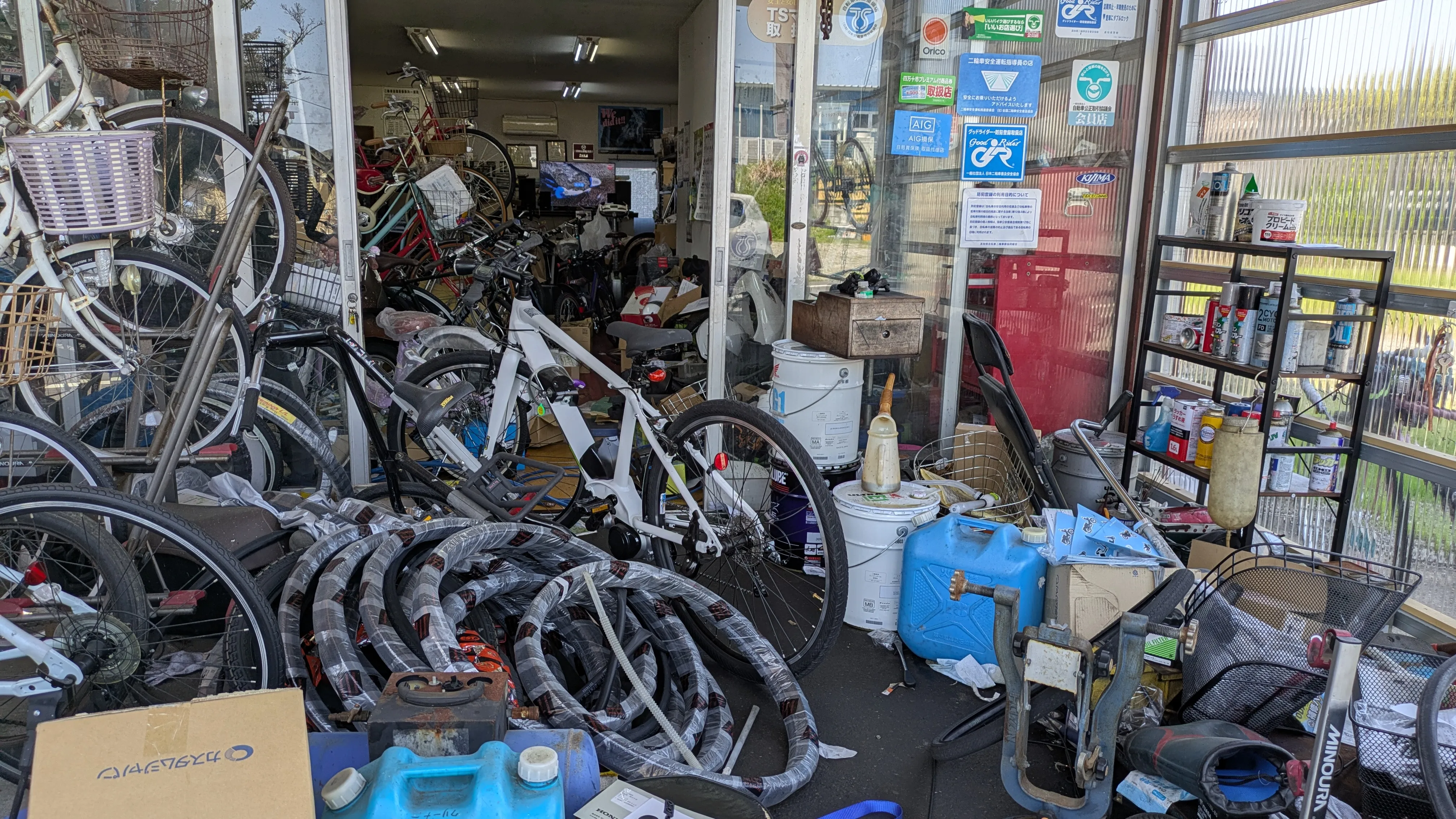
The third shop is chaos. There's barely a path through it, and the owner gestures for us to stay near the entrance while he digs around. After 10 or 15 minutes of moving piles of bikes, boxes, and parts, he finds a single rinko bag. Between the three shops, we've pieced together enough. Mission accomplished.
We get lunch from Lawson and eat by the river, then ride out to Tosa-Saga. The ride is uneventful but quick, with a few increasingly elaborate tsunami refuge towers along the way.
At the station, we ask how to buy tickets. A grumbly old man says a lot we don't understand but points to the timetable. A woman next door helps us figure out that we can buy tickets on the train, after a Google Translate exchange.
Taking the bikes apart feels disorienting. Suddenly we're on foot, overloaded and clumsy, no longer self-sufficient. It's unclear what the rules are for baggage, tickets, or anything else.
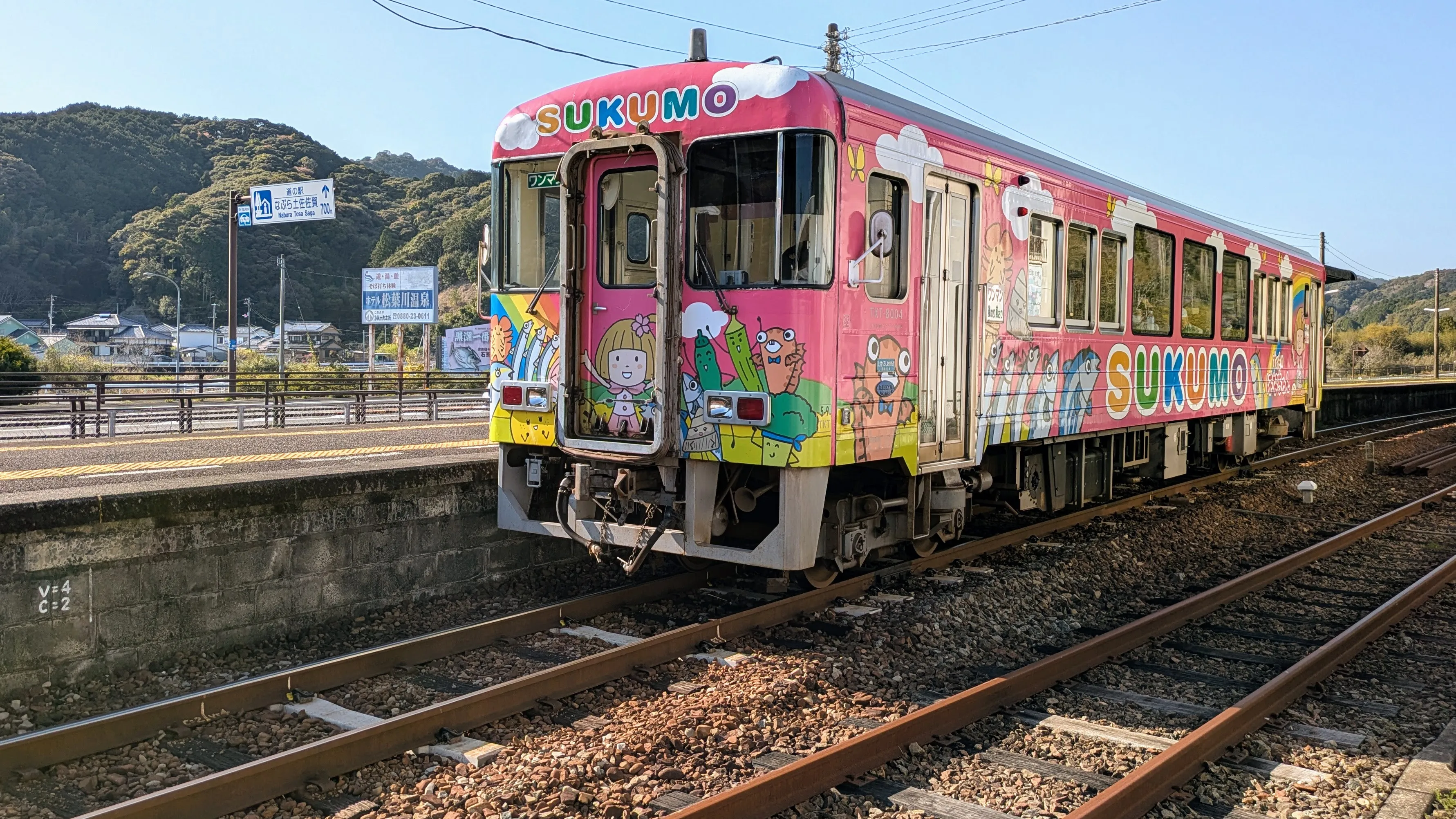
The trains that pass by are decorated with colorful murals—anime, children's drawings. Ours arrives and the conductor immediately starts gesturing and blowing his whistle. We scramble to load everything in time. The train is mostly empty.
I try to wedge my bike into a luggage area, and a uniformed man stands nearby watching. I assume he's checking that we've packed everything properly, but he just wants us to pay. He doesn't seem concerned about the bikes at all.
The train ride is a blur of tunnels and occasional glimpses of the ocean.
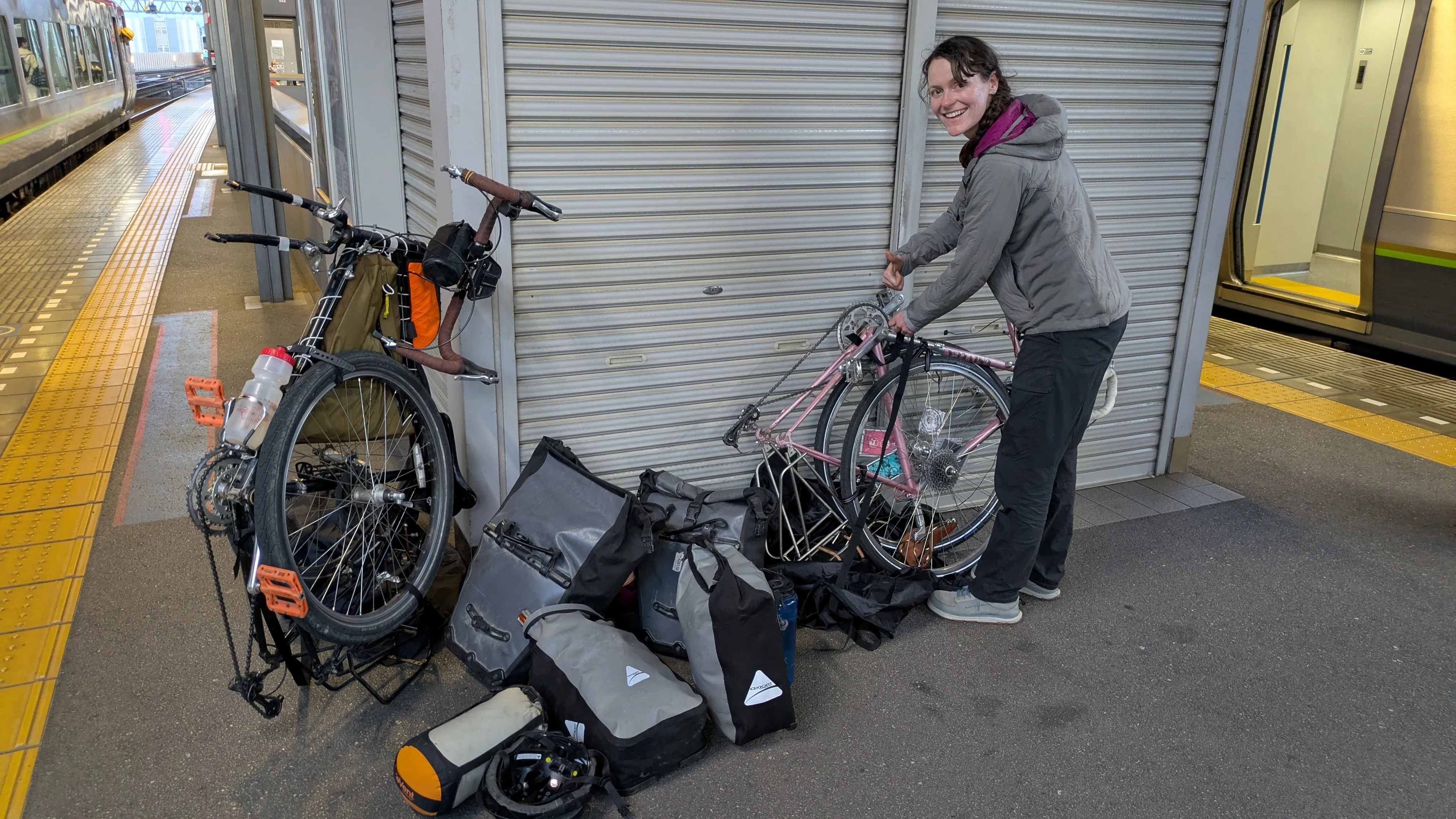
In Kochi, we unload everything onto the platform and start reassembling the bikes. A serious-looking employee tells us we can't do that here and need to leave. We take an elevator down and are immediately met by another official holding a tablet with a translated message: "please don't do this ever again here." We realize we're in a large, bright, modern station with shops and foot traffic—completely different from where we boarded. We do a quiet walk of shame out of the station.
I buy cold medicine - my throat was scratchy yesterday and now my nose is running — then we head to the hotel. The hotel staff insist we store the bikes in the lobby and even rope them off with gold stanchions and chains. It feels excessively posh; we try not to let the red carpet treatment go to our heads (or our bikes').
We wander a few blocks and find a ramen place that looks busy enough to be good. It is. The best ramen of the trip! The staff is young and friendly and patient with our Japanese.
Later on, we try the rooftop onsen at the hotel. I accidentally wear someone else's sandals into the onsen, thinking that they're communal. As we leave, the man whose sandals I took looks around, confused, then just takes someone else's sandals in turn. Because the onsens are separated by gender, Leah's is in the other building. We compare notes afterward back in the hotel.
Notes
- For me, bike touring has been about adventure and solitude, not just an alternative mode of travel and sightseeing. This route was a departure from that type of riding, so visiting unique sites and planning fun experiences along the way kept it fun and helped mitigate frustration.
- (on a similar note) It's okay for travel partners to have separate itineraries for a few days
- I am food agnostic, perhaps to a fault. It's all fine.
- Bidets are way better and keep you cleaner
- Cotton is heavy and dries slow. Even when just using it for street clothes, it's still annoying. Just use wool that can also be casual wear.
- Bring real rain gear you can ride all day in. The potential discomfort is usually not worth the weight savings.